
You upgraded to spray foam insulation to lower your energy bills and create a more efficient home. But what your installer didn't tell you could be costing you your health—and your insurance policy.
In Florida's relentless humidity, the transition from a traditional vented attic to a completely "sealed" attic completely alters the building science of your home. While polyurethane foam is an incredible insulator, applying it incorrectly or failing to manage the newly depressurized environment turns your home into a toxic trap.
Danger #1: The "Moisture Trap" (Mixing Insulations)
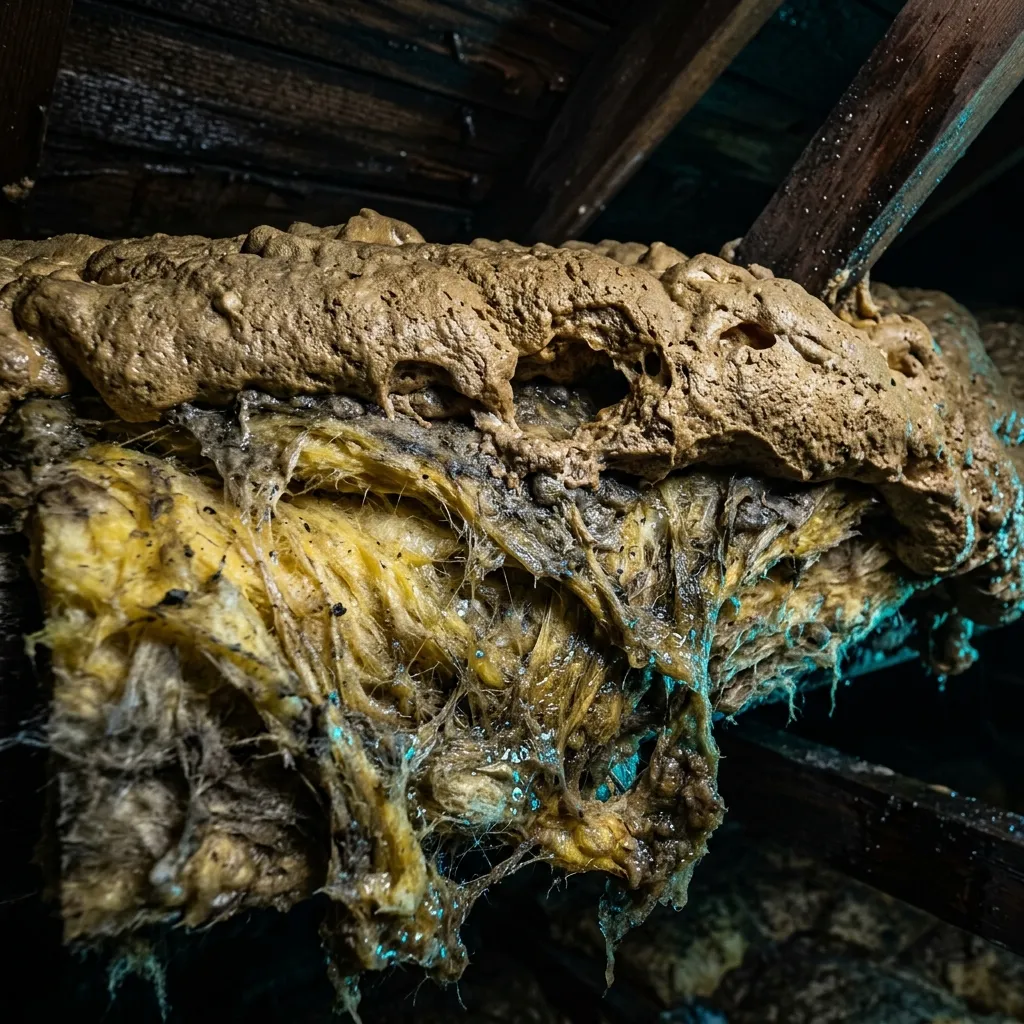
This is the most common and devastating mistake we see in Florida retrofits. Many budget installers spray the new foam directly onto the underside of the roof deck to "seal" the attic, but they leave the old fiberglass or cellulose insulation sitting on the attic floor.
Why is this a death sentence for your drywall?
When you seal the roof, the attic essentially becomes part of the living space, sharing the same air volume. However, that old fiberglass acts like a giant, porous blanket. Any condensation or humidity that enters the attic gets trapped inside the old insulation. Because the attic is now hermetically sealed, that moisture cannot evaporate.
The Biological Result:
The old fiberglass becomes a massive, wet sponge festering directly above your ceilings. Within months, it breeds a massive colony of hidden mold that slowly eats through the drywall and drops invisible spores into your living space via light fixtures and AC vents.
Danger #2: The Stack Effect and Depressurization
When an attic is sealed with spray foam, the natural ventilation is eliminated. As your home heats and cools, the changes in pressure cause the house to depressurize. This creates the "Stack Effect," where the house acts like a vacuum, sucking the stagnant, contaminated air from the sealed attic directly down into your living rooms and bedrooms.
Danger #3: Toxic Off-Gassing (The "Fish Smell")

Spray foam is a complex chemical compound created on-site. If the installer's equipment mixes the two primary chemicals (A-side and B-side) at the wrong ratio or incorrect temperature, the foam will never fully "cure". The result? A permanent release of Volatile Organic Compounds (VOCs) that often smells intensely like chemicals or dead fish, causing severe headaches and neurological symptoms for sensitive individuals.
Danger #4: Invisible Structural Rot & Insurance Denials
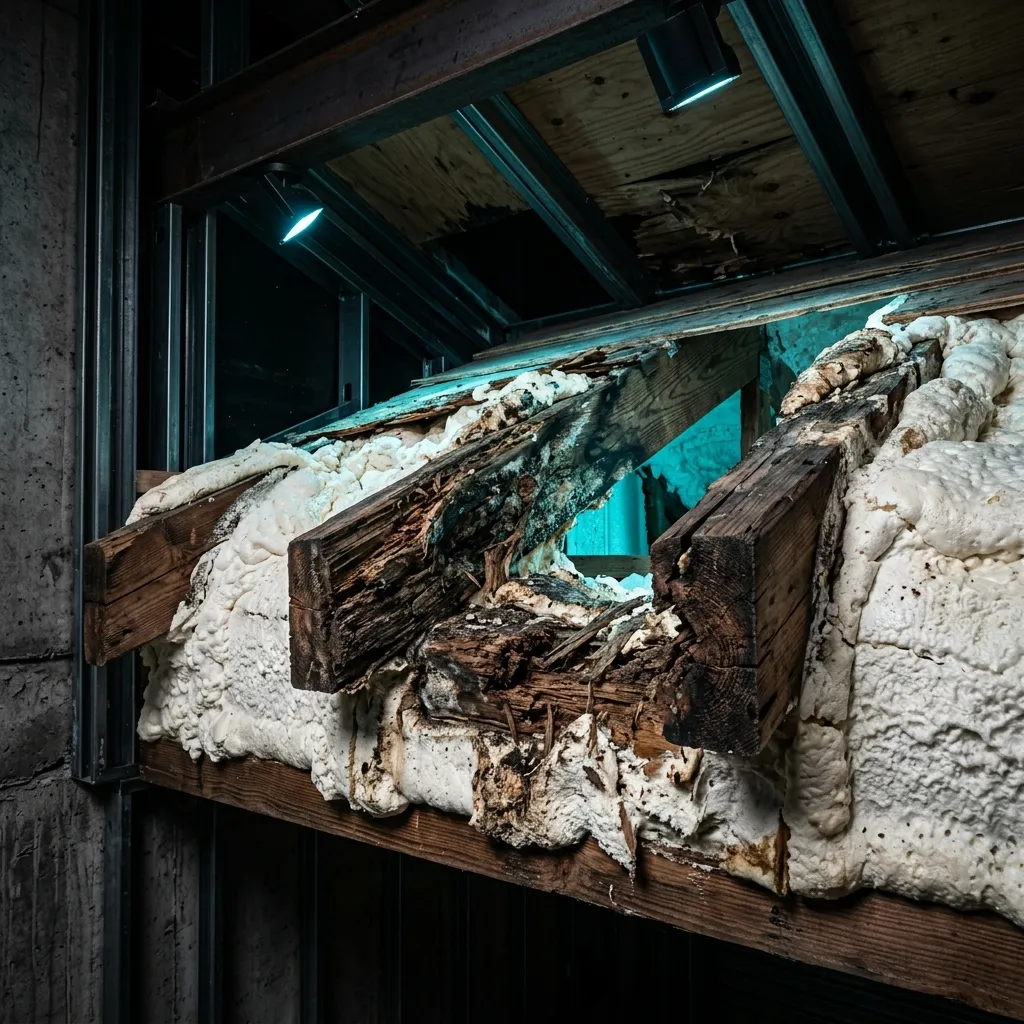
In a normal vented attic, a roof leak is obvious: you see water dripping. With spray foam applied directly to the roof deck, a minor leak gets trapped behind the impermeable foam. The water slowly rots the wooden trusses and roof decking for years without a single drop showing inside the house. When the damage is finally discovered, many Florida insurance carriers will deny the claim, citing "long-term pre-existing rot."
Danger #5: Pets Are the First Victims
Because dogs and cats have olfactory systems thousands of times more sensitive than humans, they are often the first to suffer from a toxic sealed attic. If your dog suddenly refuses to go upstairs or into certain rooms, or develops unexplained respiratory sneezing, they are likely detecting microscopic mold spores or VOC off-gassing settling near the floor.
Danger #6: The Open-Cell Permeability Flaw
Many contractors use "Open-Cell" foam because it is cheaper. However, open-cell foam is highly permeable to vapor. In Florida's extreme humidity, water vapor easily travels right through the foam and condenses against the cool air-conditioned wood structure. This creates a perfect, dark breeding ground for mold directly against your roof deck.
Danger #7: The Oversized HVAC Short-Cycle
When you seal an attic, you drastically reduce the heat load on your house. If you don't downsize your HVAC unit, your current Air Conditioner becomes "oversized" for the new environment. An oversized AC cools the house too quickly and shuts off before it has time to extract humidity from the air. The result is a cold, clammy house with high indoor humidity—the exact recipe for mold growth on furniture and clothes.
Fatal Mistake: The "AC Vent Hack"
To combat the heat in a sealed attic, AC companies or homeowners sometimes cut holes in the HVAC supply duct to "dump" cold air directly into the space. Never do this. Dumping supply air into the attic severely depressurizes the living space below. This creates a Venturi effect: the house acts like a giant vacuum, violently sucking toxic off-gassing, fiberglass particles, and mold spores from the attic directly down into the air you breathe. Furthermore, you will almost immediately see massive black mold growing directly around the holes cut into the ductwork due to condensation.
The Solution: How to Protect Your Sealed Attic
If you already have spray foam, removing it is astronomically expensive and often damages the roof deck. The modern, building-science approach is to actively manage the environment within the sealed attic.
1. Dedicated Dehumidification
You must install a commercial-grade dehumidifier specifically designed for attics, constantly draining the excess moisture that your oversized AC is missing. This prevents the "moisture trap" from ever reaching the dew point where mold thrives.
2. Sani Attic Guardian
Dehumidification controls water, but it doesn't neutralize toxic off-gassing or kill existing mold spores. The Sani Attic Guardian uses ActivePure® technology to actively seek and destroy VOCs, fish smells, and mold DNA 24/7.
Learn About Attic GuardianFrequently Asked Questions
Suspect Hidden Mold Behind Your Spray Foam?
Don't wait for structural failure or health symptoms. Sani-Effect specializes in auditing sealed attics, neutralizing off-gassing with CLO2 treatments, and installing active purification systems.
Or speak directly with our Building Science experts: (772) 206-2121