
Listen to the Audio Insight: How Your Attic Dictates Your Health
In Florida's hot and humid climate, attics are one of the most vulnerable spaces in any home. When a house relies on traditional insulation—like blown-in cellulose or fiberglass—and isn't properly maintained, the attic can quickly become ground zero for toxic mold proliferation, directly impacting the air your family breathes.
The Lifecycle of Traditional Insulation
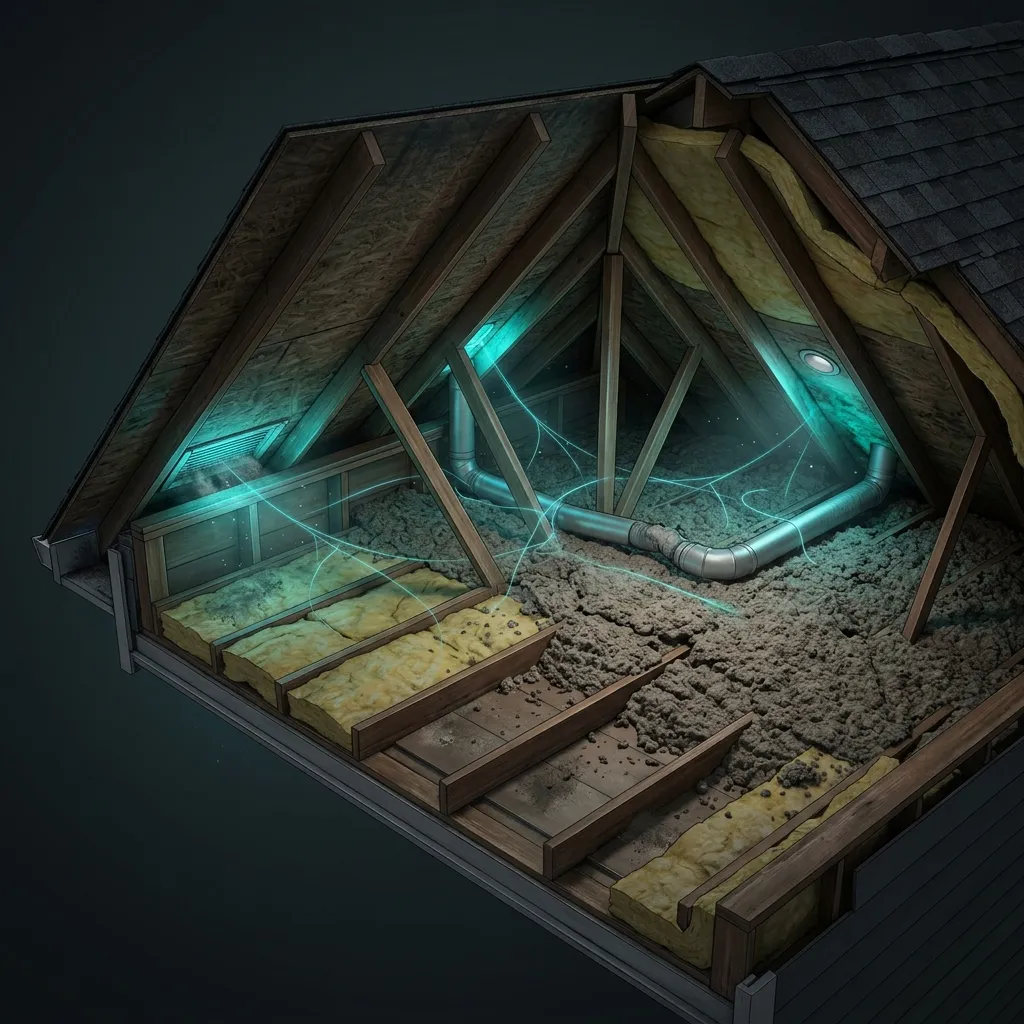
Many homeowners are unaware that traditional insulation has a functional expiration date. Due to Florida's extreme heat and humidity, materials degrade much faster than they do in northern climates. Blown-in cellulose has a typical lifespan of 10-15 years, while fiberglass typically lasts 15-20 years. As these materials age, they become dry, brittle, and compressed. This degradation not only destroys their thermal efficiency (costing you money on your AC bill), but it also turns the insulation into a massive filter that traps decades of dust, dead insects, rodent feces, and moisture.
The "Sponge" Effect: Why It Becomes a Mold Magnet
Both fiberglass and cellulose behave differently, but both share a fatal flaw when introduced to attic moisture:
- Cellulose (The Organic Food Source): Made largely from recycled paper, cellulose is highly organic. If an undiscovered roof leak or high humidity wets this material, it acts like a sponge. Because it is literally "food" for fungi, mold can colonize massive areas of cellulose in as little as 48 hours.
- Fiberglass (The Dust Trap): While fiberglass itself is not organic and mold cannot "eat" it, it acts as an immense filter. Over years, it traps organic dust, skin cells, and pollen from the air. When Florida humidity enters the attic, the moisture mixes with this trapped dust, creating the perfect breeding ground for toxic mold to grow directly on the fiberglass fibers.
- Pest Contamination: Rodents love nesting in both materials. Their waste, combined with humidity, creates a highly toxic biological environment that accelerates mold growth.
The Stack Effect: How Attic Air Enters Your Bedrooms
"But the mold is in the attic, how can it affect my family?" This is the most common—and most dangerous—misconception. Through a building science principle known as the Stack Effect, hot air rises and escapes through the upper levels of your home, creating a vacuum that pulls air from the lower levels. However, during the summer, when your AC is running and doors are closed, the house can depressurize. This depressurization actively pulls stagnant, mold-contaminated air from the attic down into your living spaces through unsealed recessed lights, attic hatches, air conditioning ducts, and tiny cracks in the ceiling.
Warning Signs: Is Your Attic Making You Sick?
If you are concerned about your home's indoor air quality, pay attention to these subtle warning signs that indicate your attic insulation may be failing:
Persistent Odors
A musty, "old home" smell that never seems to go away, especially after it rains or when the AC turns on.
Temperature Fluctuations
Rooms that are unusually hot or cold, indicating that the insulation has compressed and lost its thermal barrier.
Unexplained Allergies
Family members experiencing chronic coughing, sneezing, headaches, or asthma symptoms that only occur while inside the house.
Ceiling Stains
Faint brown or yellow water rings on the ceiling. Even if they are dry to the touch, they indicate a past or ongoing moisture event above.
Why You Cannot Just "Clean" Old Insulation
A common mistake is attempting to spray bleach or fog antimicrobial chemicals over contaminated insulation. This is ineffective and dangerous. Because traditional insulation is highly porous, mold roots grow deep inside it. Spraying the surface only masks the problem, and adding moisture (like bleach) actually feeds the mold root.
The Sani Effect Solution: Complete Restoration
The only scientifically sound protocol is extraction. Our Sani-REMEDIATE protocol involves sealing off the home, placing the attic under negative air pressure with HEPA filtration, and physically vacuuming out every inch of the contaminated insulation. Once the raw wood is exposed, we deep-clean the structure, apply antimicrobial encapsulants, and install fresh, clean insulation to permanently restore your home's air quality.
Don't Wait Until It's Too Late
Early detection and professional remediation can prevent serious health complications and protect your property value.