VOCs from your laundry detergent. CO2 from a sealed bedroom. Bacteria from your HVAC drain pan. Viruses recirculated through your air handler. The invisible threats inside Florida homes go far beyond fungal spores.
The EPA ranks indoor air pollution among the top 5 environmental health risks. The average Florida home contains a complex cocktail of biological, chemical, and particulate contaminants — most of which are invisible, odorless, and undetectable without professional monitoring equipment.
Ironically, the products families use to clean their homes — laundry detergents, fabric softeners, air fresheners, disinfectant sprays — are among the most significant sources of indoor VOC contamination.

Volatile Organic Compounds off-gas continuously from hundreds of common household products. They accumulate in poorly ventilated Florida homes and reach concentrations that exceed outdoor EPA limits — inside your living room.
#92400e
Health EffectsPressed wood furniture, cabinets, flooring laminate, insulation foam, permanent press fabrics.
#991b1b
Health EffectsAttached garages, tobacco smoke, stored paints, cleaning products, air fresheners.
#92400e
Health EffectsPaints, adhesives, nail polish, cleaning fluids, gasoline stored in garage.
#991b1b
Health EffectsPaints, varnishes, rust preventers, adhesives, rubber, leather.
#7e22ce
Health EffectsDry-cleaned clothing brought indoors. Releases PERC vapor for days after cleaning.
#5b21b6
Health EffectsFiberglass, rubber, plastic, insulation, carpet backing, disposable cups.
A 2011 University of Washington study found that top-selling laundry products — including "green" labeled ones — emitted over 25 VOCs through dryer vents, including acetaldehyde and benzene with no safe exposure level. These compounds permeate the entire home.

Florida homes are biological incubators. Warm temperatures, sealed HVAC systems, and high humidity create permanent hospitable conditions for microbial growth on surfaces and in the air — independent of visible mold.
HVAC cooling towers, water heaters below 140°F, humidifiers, decorative fountains.
Health ImpactLegionnaires disease — a severe pneumonia with 10% mortality rate. Spreads via aerosol inhalation. Florida is a high-incidence state due to warm water systems year-round.
Showerheads, sink drains, HVAC drain pans, humidifiers.
Health ImpactPulmonary disease (NTM lung disease), skin infections. Increasingly drug-resistant strains found in household plumbing biofilm.
Bedding, towels, gym bags, kitchen sponges, door handles.
Health ImpactSkin and soft tissue infections, sepsis, pneumonia. Community-acquired MRSA spreads through contact with contaminated surfaces and shared items.
Exhaled aerosols from infected occupants, recirculated by HVAC systems.
Health ImpactRespiratory illness, pneumonia, death in vulnerable populations. Viral particles survive up to 24 hours on hard surfaces.
Active mold colonies metabolizing organic material produce volatile gases.
Health ImpactHeadaches, nausea, cognitive impairment, respiratory irritation — even without direct spore exposure. MVOCs indicate active mold metabolism.
Dead gram-negative bacteria in HVAC dust, humidifiers, and water-damaged materials.
Health ImpactPotent inflammatory trigger. Causes fever, chills, hypotension. Endotoxins survive after the bacteria are killed — disinfection does not eliminate them.
Exhaled by occupants, produced by combustion appliances. In sealed Florida homes, CO2 accumulates rapidly — especially bedrooms and home offices.
Typical sealed bedroom reaches 1,200+ ppm within 4 hours of sleep with windows closed.
The "silent killer." Produced by gas stoves, water heaters, generators, attached garages, and blocked flues. Colorless, odorless, immediately lethal at high concentrations.
CO detectors are legally required in Florida new construction since 2012 — but most existing homes still lack them.
Naturally occurring radioactive gas from uranium decay in soil. Enters homes through foundation cracks. Second leading cause of lung cancer in the US — responsible for 21,000 deaths/year.
Radon is completely invisible, odorless, and tasteless. A $15 test kit is the only way to know.
Microscopic particles — smaller than a human hair — penetrate deep into lung tissue and enter the bloodstream. Sources are everywhere in Florida homes and many are generated by activities people consider safe.
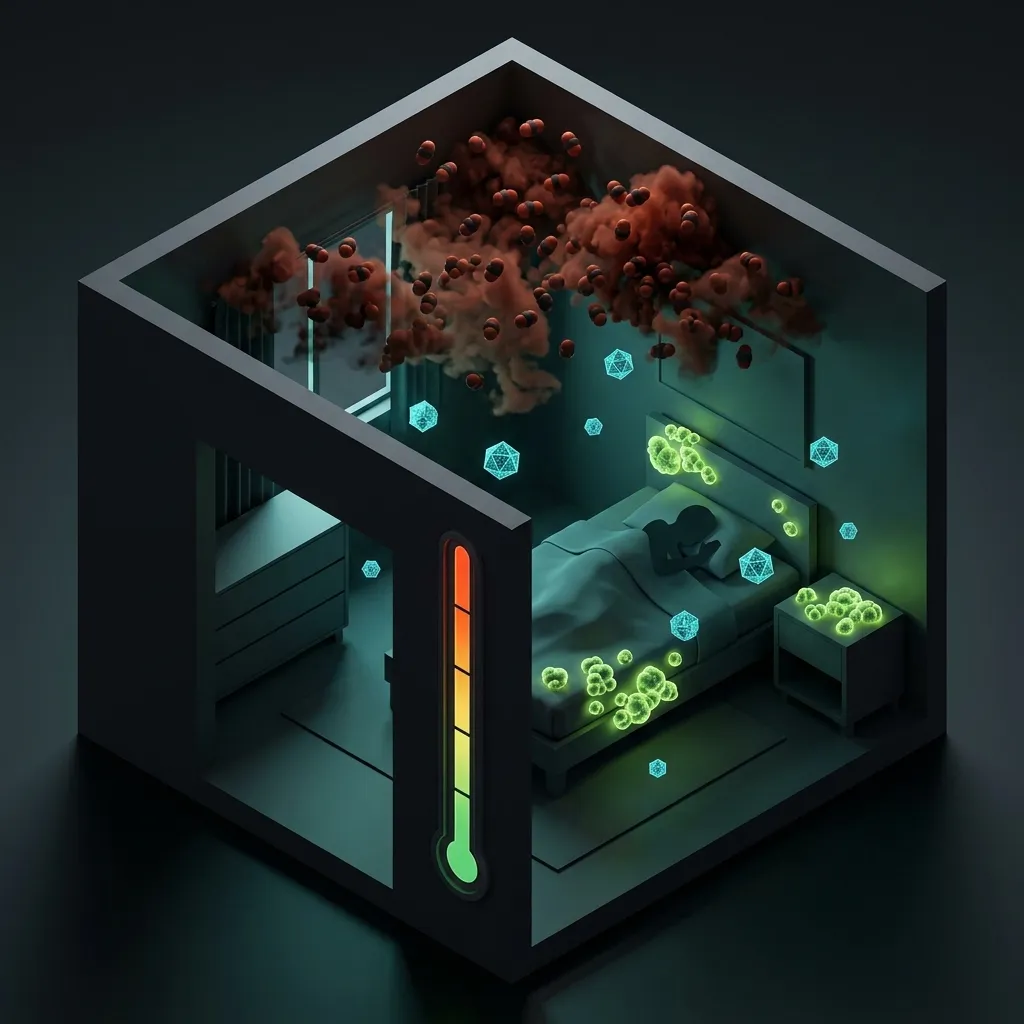
Indoor pollutants do not act independently. High CO2 suppresses immune response, making occupants more vulnerable to bacterial and viral infection. VOCs from cleaning products react with ozone from air purifiers to create new, more toxic compounds. MVOCs from mold displace oxygen in enclosed spaces, concentrating other pollutants.
Florida's sealed building envelopes — optimized for energy efficiency and AC performance — create the worst possible scenario: maximum contaminant concentration with minimum dilution through fresh air.
These are the top questions searched on Google about indoor pollutants — answered with scientific accuracy.
Practical steps ranked by impact — what you can do before your professional evaluation.
Open windows or use range hood every time you cook — gas or electric. Cooking is the #1 source of acute PM2.5 spikes in residential buildings.
Replace all scented laundry products, cleaning supplies, and air fresheners with unscented alternatives. This single change can reduce VOC levels by 30”“50%.
Even 10 minutes of cross-ventilation morning and evening significantly dilutes accumulated CO2 and VOCs. Florida mornings (6”“9am) offer the best outdoor air quality windows.
Your AC drain pan is a bacterial biofilm incubator. Clean and treat monthly during high-use season with enzymatic cleaner, not bleach (which reacts with organics to form chloramines).
Studies show that 80% of home floor contamination — including pesticides, lead dust, and bacteria — is tracked in from outside on shoes. A simple no-shoes policy is highly effective.
A comprehensive indoor air quality assessment identifies ALL pollutant categories simultaneously — not just mold. Sani Effect ETCI protocol includes VOC screening, air sampling, thermal imaging, and a full written report.
Our ETCI Protocol evaluates mold, VOCs, bacteria, particulates, and air quality in a single comprehensive inspection. Know exactly what your family is breathing.
Sani Effect - Online