
If you live in South Florida—from Palm Beach to Port St. Lucie—you know firsthand the relentless challenge posed by our tropical humidity. However, there is a devastating phenomenon that we see every day in high-value homes: cases where the HVAC system is properly sized, dedicated dehumidification equipment is installed, the spray-foam attic is dry, and yet the relative humidity (RH) in the living space refuses to drop below 60%.
The Unseen Culprit Revealed
The Answer? Your concrete slab foundation is acting like a suction pump, drawing groundwater directly up into the air your family breathes.
The Science of Soil and Concrete: Why Does This Happen?
To understand why traditional dehumidification fails, we must analyze the microstructure of building materials and the physics of water vapor in Florida's coastal environment.
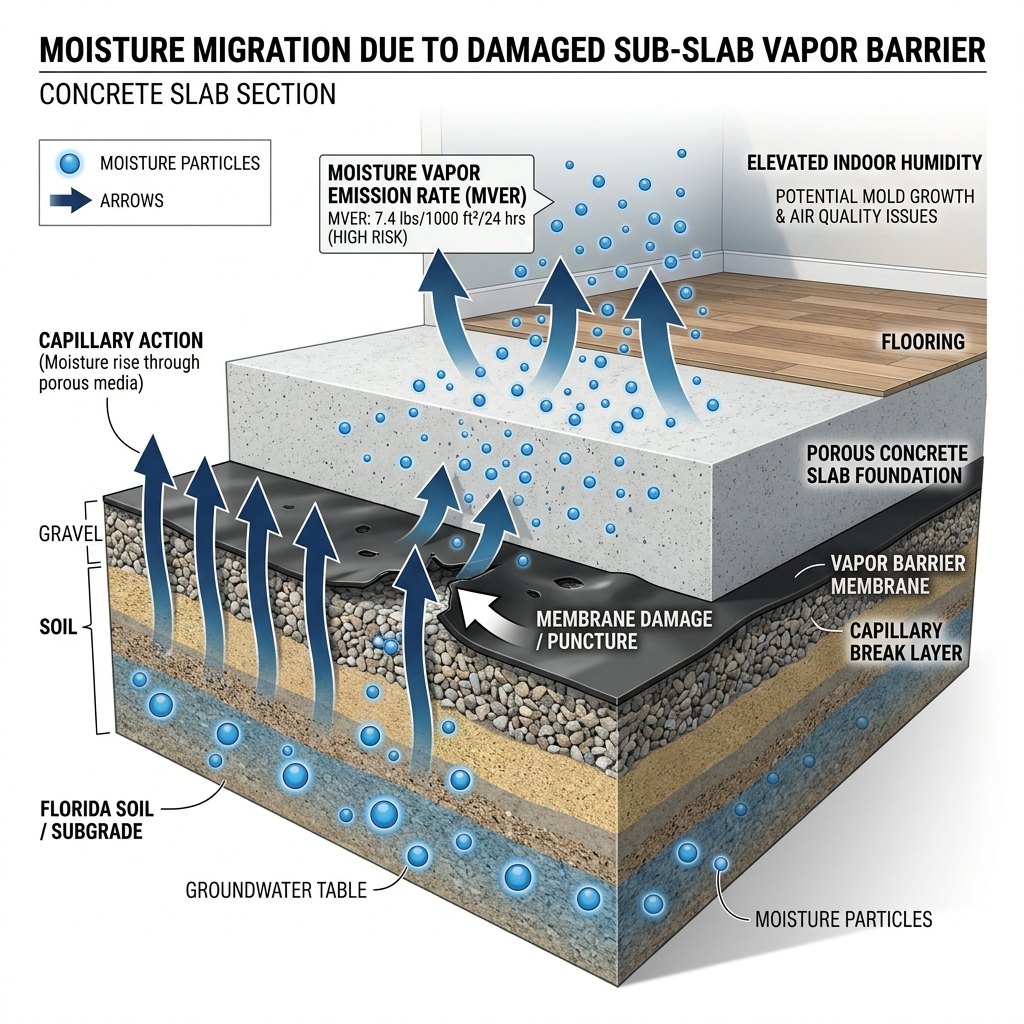
Figure 1: Capillary suction mechanism and Moisture Vapor Emission Rate (MVER) pressure gradient accelerating moisture intrusion.
1. Capillary Suction and High Water Tables (Rising Damp)
Concrete poured on grade is not a solid, impermeable block; it is a porous matrix filled with micro-capillary networks. In cities like Boca Raton, Delray Beach, or West Palm Beach, the close proximity to lakes, canals, and the Atlantic Ocean keeps the water table just a few feet below the surface.
Through capillary action, the tiny pores in the concrete draw liquid groundwater upward against gravity. If the slab lacks an intact sub-slab vapor barrier (or if the original 6-mil polyethylene membrane has degraded over time), water continuously migrates to the interior surface.
[ Dry Interior Air (~50% RH) ]  <--- Dehumidifier pulls moisture faster!
----------------------------------
[ Porous Concrete Slab ]        <--- Vapor Diffusion (Elevated MVER)
----------------------------------
[ Damaged / Missing Vapor Barrier ]
----------------------------------
[ Saturated Soil / High Water Table (Lake) ]
2. Vapor Emission (MVER) and the Pressure Gradient Paradox
Moisture in concrete doesn't always show up as standing water. It travels as a gas measured by the Moisture Vapor Emission Rate (MVER, in lbs/1,000 sq. ft./24 hrs).
The Dehumidifier Paradox: When you install a powerful dehumidifier and seal the building envelope (for instance, with spray foam insulation in the attic), you create a tight indoor environment with very low vapor pressure in the air. Nature always seeks equilibrium. As a result, the dry indoor air pulls the vapor trapped inside the concrete slab with even greater kinetic force ($\Delta P$). The harder your equipment tries to dry the air, the more moisture it pulls up from the soil underneath.
Mold Proliferation and the Danger of Mycotoxins
When relative humidity consistently stays above 60% RH, mold's biological cycle is triggered. Dormant spores activate in as little as 24 to 48 hours on organic substrates like wood, drywall, furniture fabrics, and baseboards.
The Bleach Myth: Why We NEVER Use Bleach
Commercial bleach should never be used on porous materials. Bleach is made of 90% water. When applied to drywall or wood, the large chlorine molecules remain on the surface, stripping away the visible color, while the smaller water molecules penetrate deep into the material—feeding the mold's root structure (hyphae). Bleach does not eliminate mold on porous surfaces; it feeds it long-term.
Beyond visible mold growth, high humidity fosters the release of mycotoxins: toxic, "sticky" chemical compounds produced by mold that persist long after visible growth is gone. Mycotoxins adhere to HVAC ductwork and textiles, triggering chronic inflammatory responses, severe fatigue, allergies, and respiratory issues.
Real South Florida Case Studies
Luxury Waterfront Residence in Boca Raton, FL
The Situation: Spray-foam insulated attic, two new HVAC systems sized precisely via Manual J calculations, and a 98-pint dehumidifier. Indoor humidity remained trapped between 64% and 68% RH.
Sani-Effect Diagnosis: ASTM F2170 in-situ concrete testing revealed 89% RH inside the slab matrix, driven by the adjacent canal water table.
Lakefront Residence in Port St. Lucie, FL
The Situation: Musty odors and allergy symptoms at 63% RH. HVAC contractors suggested lowering thermostat setpoint, causing supply register sweating.
Sani-Effect Diagnosis: High moisture intrusion saturated ductwork, recirculating Aspergillus and Penicillium spores.
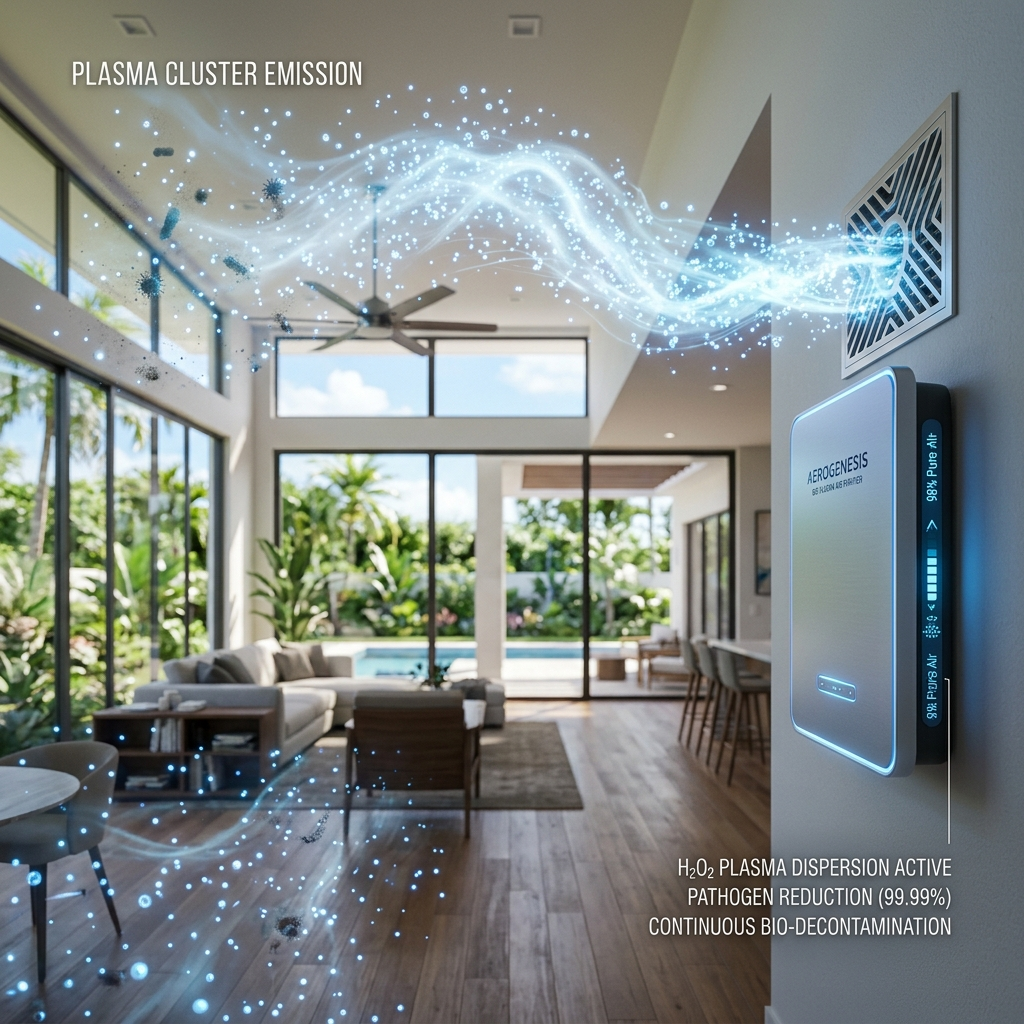
Figure 2: ActivePure® NASA-Certified Photohydrolysis purifying air and surfaces continuously using 0.02 ppm Hydrogen Peroxide plasma.
Sani-Effect's Comprehensive High-Tech Solution
Resolving foundation humidity and indoor mold contamination requires a science-backed, multi-layered strategy:
1. ENVELOPE BARRIER LAYER
Slab Moisture Mitigation (MVER Control) + Sani Attic Guardian sealants.
2. BIOLOGICAL REMEDIATION (S.M.R.S.)
Hypochlorous Acid Pro pre-fogging → CLO2 Gas treatment → Smart Polymer encapsulation → Vital Oxide Category IV disinfection.
3. CONTINUOUS PURIFICATION (HVAC)
IAQ 8000 Fungistatic Duct Sealant + ActivePure® NASA-Certified Technology (0.02 ppm Hâ‚‚Oâ‚‚ plasma).
- ActivePure® Technology: NASA-Certified Photohydrolysis converts ambient water vapor into safe hydrogen peroxide plasma (0.02 ppm) that actively destroys pathogens on surfaces 24/7.
- Organic Textile & Surface Defense: BacShield organic antimicrobial derived from crab shells protects carpets and drapes from mold decay.
- Guaranteed Peace of Mind: Post-Remediation Verification (PRV) testing by an independent 3rd-party lab with a 1-Year Renewable Warranty.
Is Your Foundation Compromising Your Indoor Air Quality?
Don't let hidden moisture damage your property's structural integrity or put your family's health at risk.