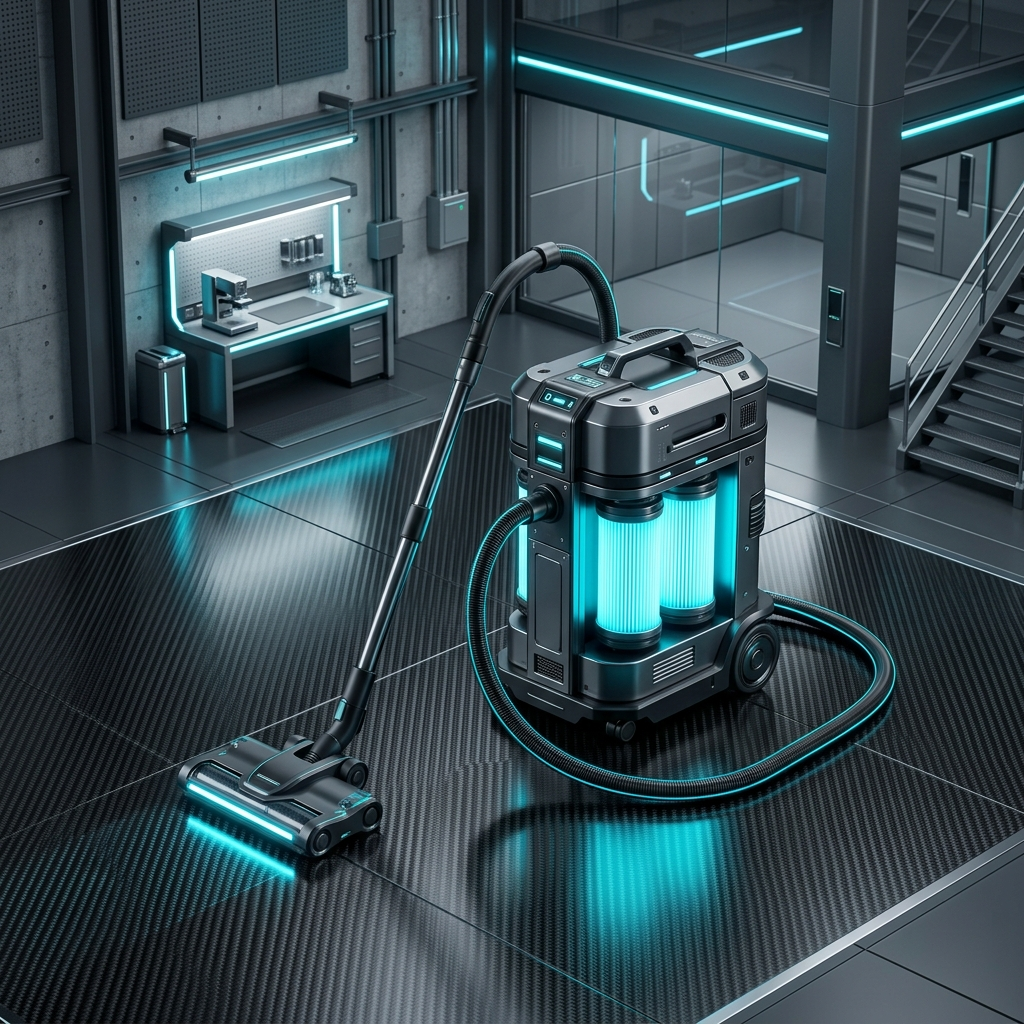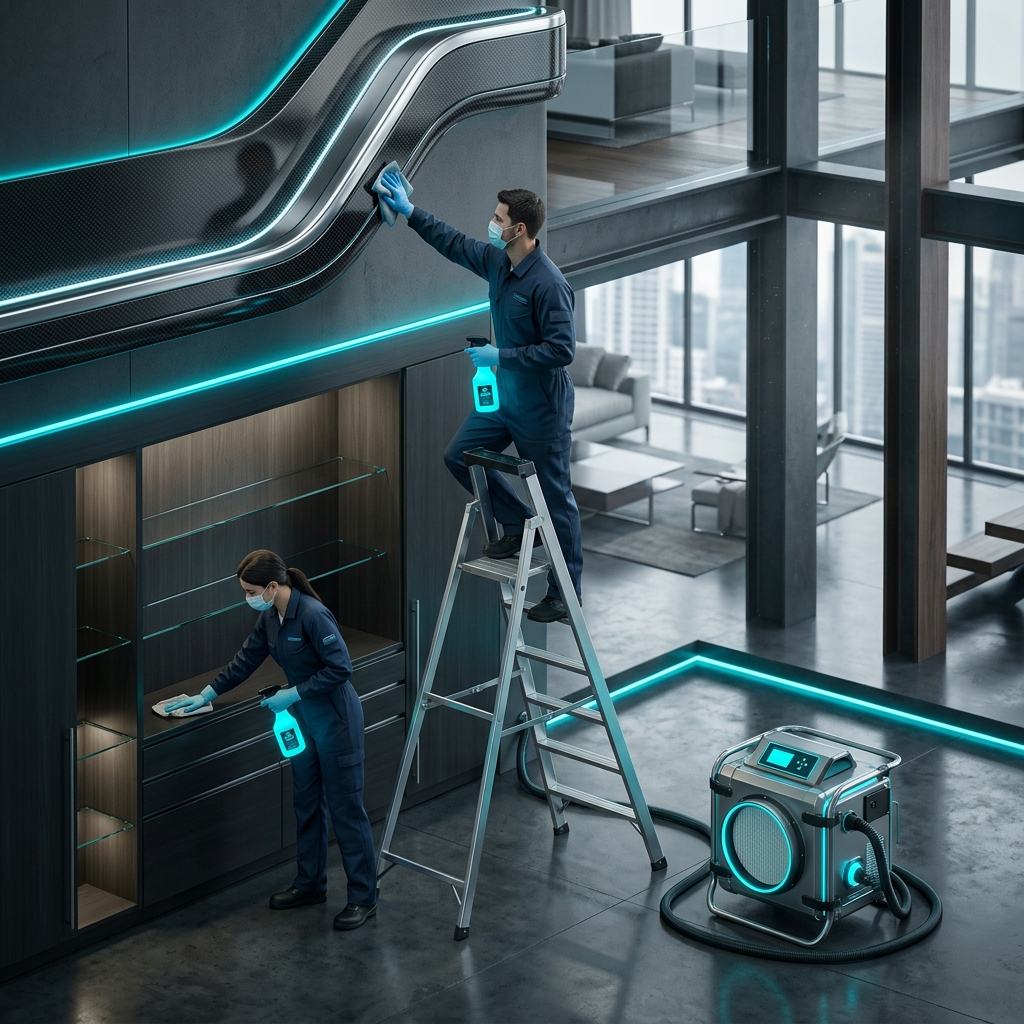
Remodeling your home is an exciting experience. Whether you have renovated the kitchen of your dreams, expanded your living room, or built a new bedroom for the kids, the final result is a reason to celebrate. However, once the contractors pack up their tools and leave, a silent enemy remains floating in the air and settled in every corner of your house: microscopic construction dust.
For most people, a quick cleaning with a broom, mop, and a standard household vacuum seems like enough. But the reality is that construction dust is not normal dirt. At SaniEffect.com, we know that to guarantee the health of your loved ones—especially if you have young children, older adults, or pets—your home needs a deep transition to what the industry defines as Condition 1 through a Post-Construction Micro-Cleaning process.
Below, we explain why conventional cleaning falls short, how long this dust actually threatens your health if left unaddressed, and how our protocol with space-age technology protects your family.
The Invisible Danger: What is Really in Construction Dust?
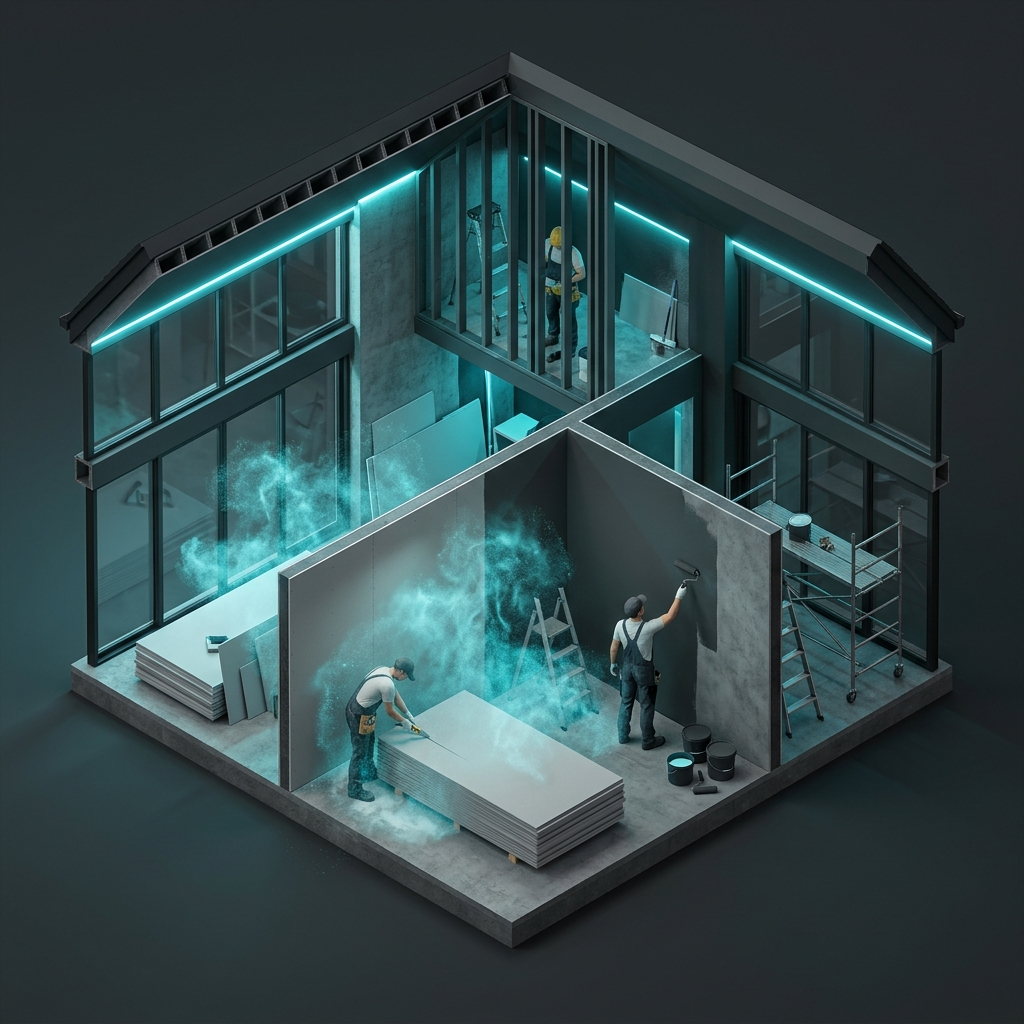
During a remodel, mechanical cutting, wall sanding, and the application of finishes release thousands of fine particles into the environment. This residual dust is not just annoying, but chemically harbors highly irritating and harmful compounds for the body:
Crystalline Silica (SiOâ‚‚)
Naturally present in drywall, joint compounds ("mud"), and cement. When sanded or cut, it is released into the respirable dust fraction. Continuous inhalation of these microscopic quartz particles is classified as carcinogenic and can cause irreversible, long-term lung damage (silicosis).
Gypsum & Joint Compounds
This dust is highly hygroscopic, meaning it absorbs moisture. When children or pets inhale it or it comes into contact with their skin and eyes, it absorbs the natural moisture of the mucous membranes, causing extreme dryness, itching, coughing, and asthma.
Volatile Organic Compounds (VOCs)
Coming from fresh paint, flooring adhesives, and varnishes. These chemical vapors continue to be released into the air for days or even weeks after the work is completed, affecting the respiratory systems of babies and asthma/allergy sufferers.
Young children (who crawl and put everything in their mouths), the elderly (with more vulnerable respiratory systems), and pets (who breathe closer to the floor) are the most exposed to the consequences of an inadequately decontaminated environment.
The Endless Cycle: How Long Does Construction Dust Float in Your Home?
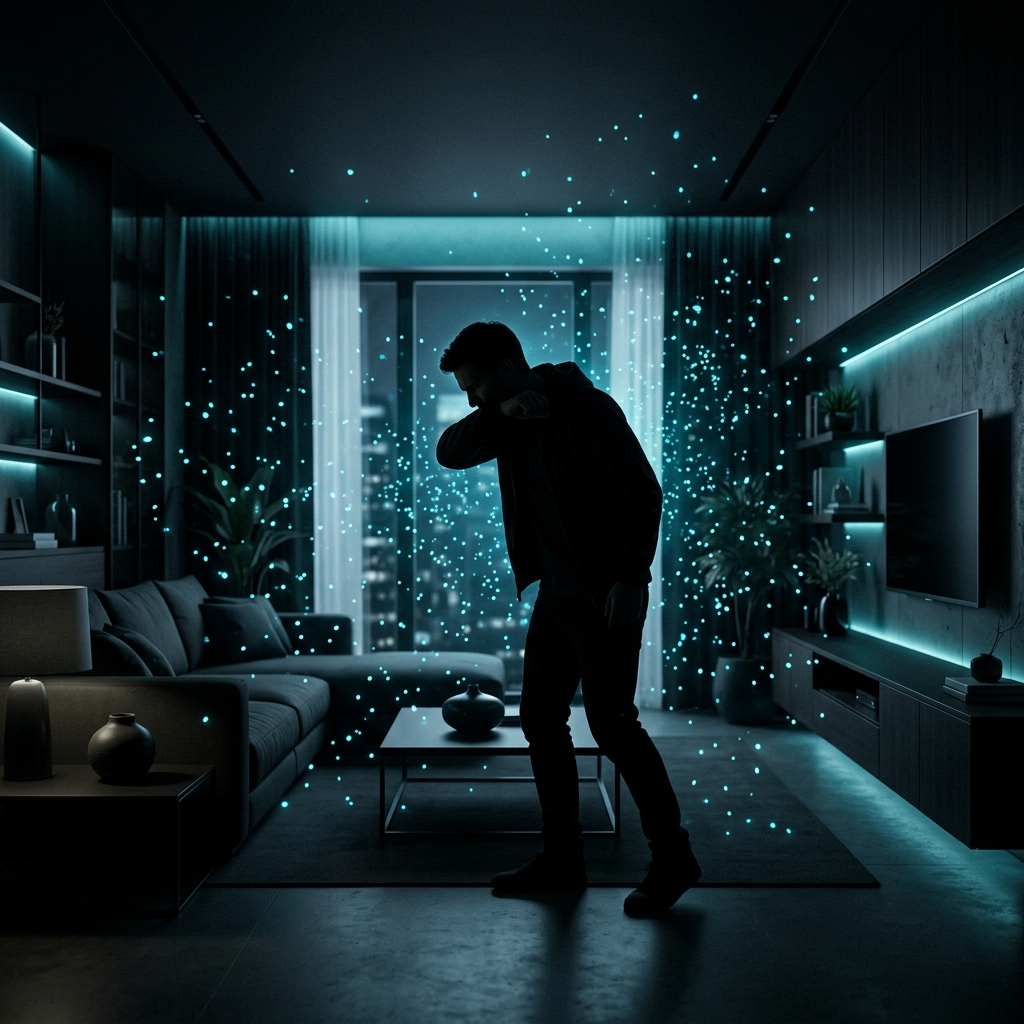
One of the biggest mistakes is believing that construction dust will settle on its own within a few hours. Scientifically, the behavior of these particles depends strictly on their size:
- Coarse particles (sawdust, heavy sand): These have a greater physical weight and typically fall to the ground within 1 to 4 hours after activity stops.
- Ultrafine and respirable particles (under 10 microns): Due to their microscopic weight, they behave almost like a gas. These particles can remain suspended in the air continuously for 48 to 72 hours, and even float for several weeks without proper filtration.
The "Return Effect":
Every time you walk through a room, open a door, sit on the couch, or turn on the air conditioner, you create imperceptible air currents that are enough to kick fine dust back up into the air. If you clean the floor but do not purify the air, gravity will cause that suspended dust to slowly settle right back onto your countertops, furniture, and carpets a few hours later. This resuspension cycle can last up to 14 days or more, making you feel like the house "never gets clean".
What is "Condition 1" and Why is it Our Goal?
In the professional restoration industry and under the standards of the international ANSI/IICRC S520 standard, Condition 1 is defined as a state of "normal fungal and environmental ecology," free of abnormal accumulations of dust, spores, and construction debris.
Achieving Condition 1 means the air in your home is truly pure and safe to breathe. At SaniEffect, our goal is not just for your house to "look clean," but to scientifically certify that it is free of harmful particles.
SaniEffect Cutting-Edge Technology: Beyond Conventional Filters
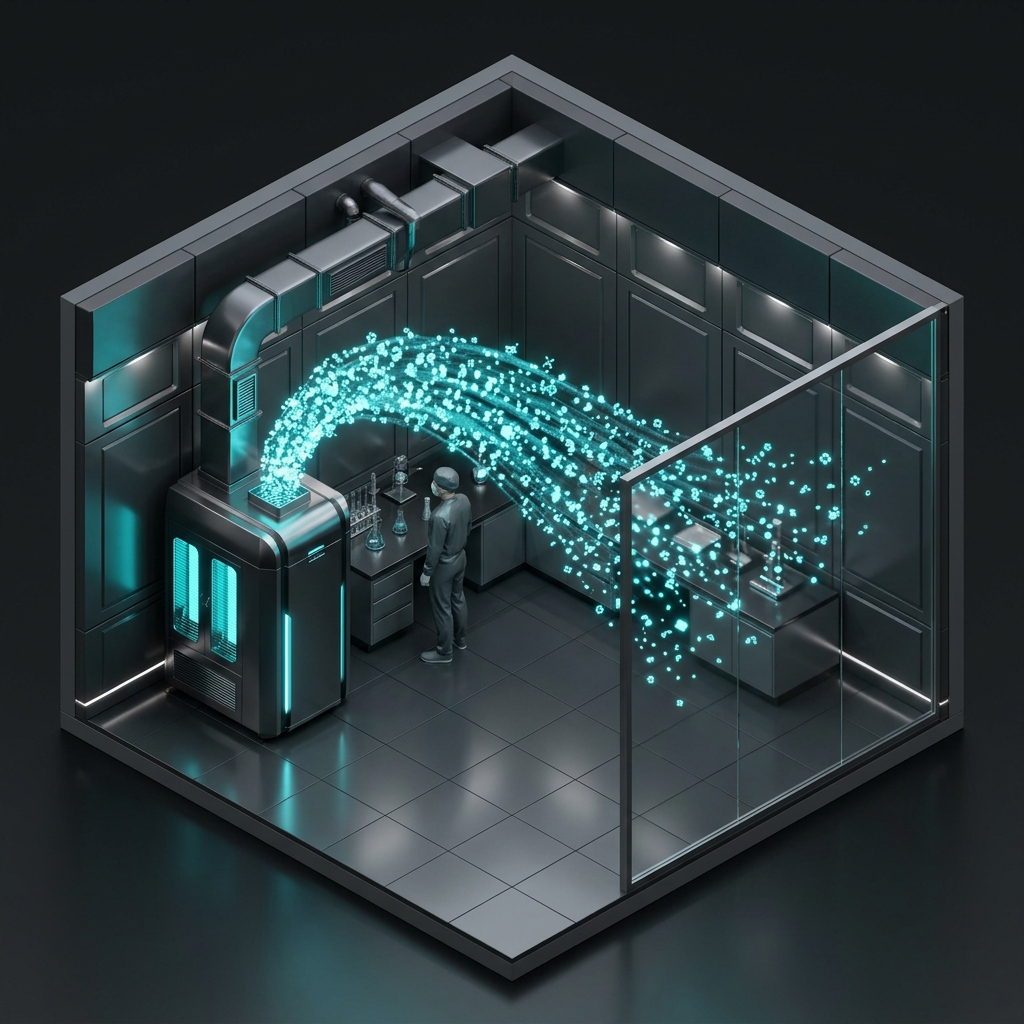
To break the suspension cycle of fine dust and neutralize chemical toxins, at SaniEffect we do not rely on traditional methods. We have designed a protocol with advanced and space-age technology that purifies both the surfaces and the air you breathe:
Negative Pressure and Air Scrubbers
During deep cleaning, dust tends to get stirred up. To prevent fine particles from migrating to clean areas of your home, we isolate the work zones using physical barriers and high-power professional air extractors (air scrubbers). By extracting air in a controlled manner and passing it through absolute HEPA filters, we create a negative pressure differential. This ensures that air from dirty rooms flows toward our filtration equipment and never escapes to the rest of the house.
ActivePure® Advanced Photohydrolysis Technology (NASA)
Most purifiers on the market are "passive" (waiting for dust to pass through the filter to catch it). At SaniEffect, we implement ActivePure® Advanced Photohydrolysis Technology, an innovation originally developed and used by NASA to maintain clean air during space missions. This technology actively projects eco-friendly purifying molecules throughout the entire volume of air in your home, destroying Volatile Organic Compounds (VOCs) from paint and neutralizing viruses, bacteria, and mold spores in real-time, directly in the air and on surfaces.
Advanced Bipolar Ionization
Our systems emit millions of positively and negatively charged ions into the environment. These ions actively seek out microscopic dust particles from drywall, silica, and wood suspended in the air, adhering to them. By bonding, the particles cluster together (becoming larger and heavier), which triggers two immediate effects: they quickly fall to the ground (leaving your breathing zone) to be vacuumed, or they are captured with much greater ease by our HEPA filters.
Common Cleaning vs. SaniEffect Micro-Cleaning
| Aspect | Common Post-Construction Clean | SaniEffect Professional Micro-Cleaning |
|---|---|---|
| Tools | Traditional brooms and standard household vacuums | Vacuums with true, medical-grade HEPA filtration |
| Approach | Removing large debris and visible surface dust | Capturing and neutralizing suspended microscopic particles |
| Air Quality Management | Fine dust is recirculated through the HVAC system | Active air purification with HEPA air scrubbers and negative pressure to prevent cross-contamination |
| Technology | None (manual, passive processes) | ActivePure® Advanced Photohydrolysis Technology (NASA-certified) and bipolar ionization to clean air in real-time |
| Standard | Subjective visual aesthetics | Condition 1 Certification (environmentally safe to inhabit) |