
Listen to the Audio Insight: How Your Attic Dictates Your Health
Closed-cell spray foam insulation is a marvel of energy efficiency, boasting a lifespan of over 80 years with a low inherent moisture risk. However, installing spray foam transforms your attic from a passively ventilated space into a completely "sealed" building envelope. While this stops hot Florida air from entering, it introduces severe, complex new challenges for indoor air quality, humidity control, and structural integrity.
The Science of the "Moisture Trap"
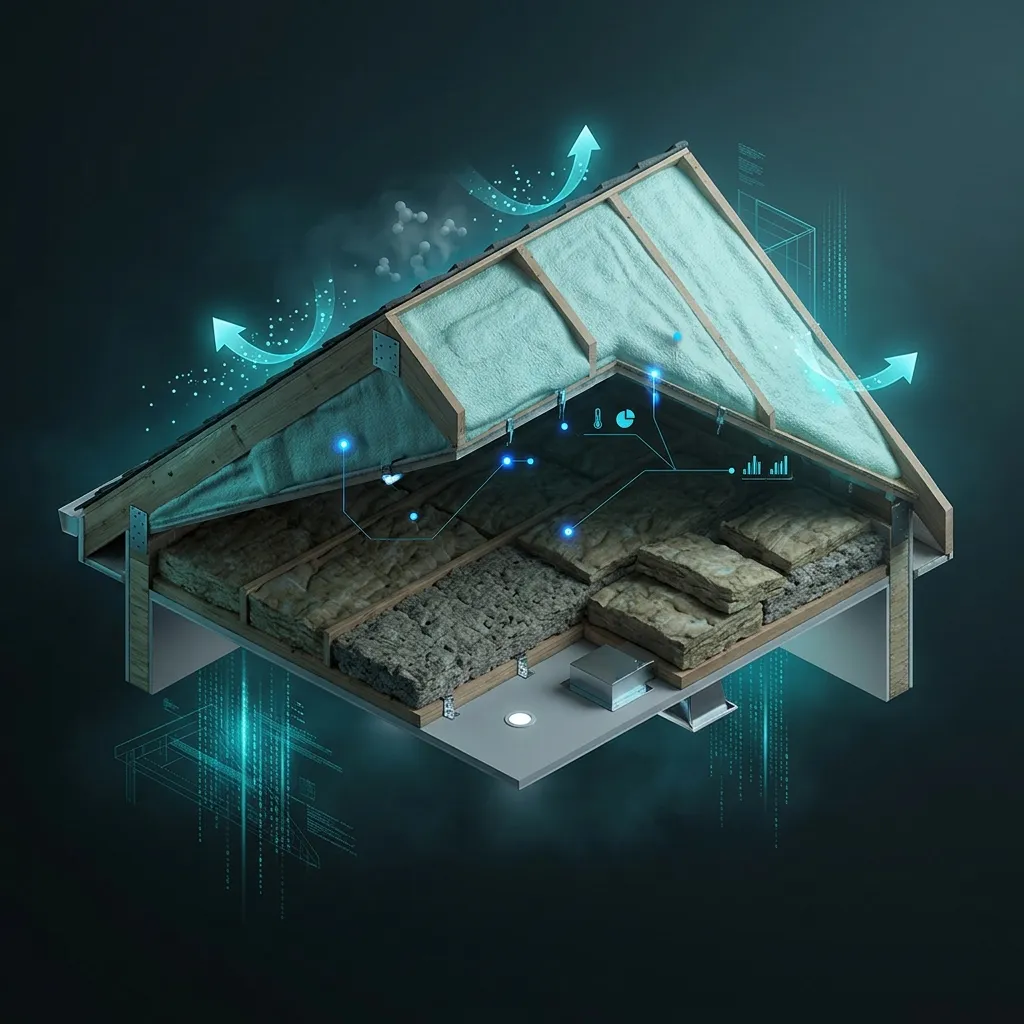
Building science studies, including guidelines from ASHRAE (American Society of Heating, Refrigerating and Air-Conditioning Engineers), emphasize that once an attic is sealed with foam, it must be treated as a conditioned space. When you seal the roof deck, you completely block natural ventilation. Humidity generated inside the home—from showers, cooking, and human respiration—rises into the attic. Because the foam creates an impermeable vapor barrier, this moisture becomes permanently trapped. As the attic cools at night, this trapped humidity reaches its dew point, condensing on AC ducts and wood framing, creating a localized rainforest perfect for mold.
The Critical Danger of Mixing Insulations
One of the most catastrophic errors made by insulation contractors in Florida is leaving old traditional insulation (fiberglass or cellulose) on the attic floor after spraying foam on the roof deck. This violates core building science principles. The old insulation acts as a giant sponge on the floor, absorbing the trapped condensation we just described. This dual-barrier effect stops thermal equilibrium and traps moisture in the dark, leading to aggressive mold growth that destroys the wood joists from the inside out.
Depressurization, Off-Gassing & Hidden Mold
A sealed spray foam attic is a highly engineered environment that can fail in several invisible ways:
The Depressurization Effect
As the sealed attic heats during the day and cools at night, the air mass expands and contracts. This creates a pressure differential. If the attic becomes depressurized relative to the living space below, it acts like a syringe, actively pushing stagnant, mold-contaminated, or chemically-laden air down into your bedrooms through recessed lighting and AC vents.
Hidden Structural Rot
Spray foam bonds to the roof decking. If a hurricane or age damages a roof shingle, water will slip behind the foam. The foam hides the leak from the inside, meaning the wood rots silently for years before you ever see a stain on your ceiling.
Chemical Off-Gassing (VOCs)
Polyurethane foam requires precise chemical mixing and curing temperatures. In Florida's extreme summer heat, the foam can fail to cure properly, permanently releasing toxic Volatile Organic Compounds (VOCs) like isocyanates and amines, which cause severe respiratory distress.
The Engineering Solution: Complete Remediation & Conditioning
Step 1: Source Removal & Sani-Coat Remediation
Before installing any conditioning equipment, the underlying contamination must be eradicated. Our comprehensive Attic Remediation Protocol involves safely removing all contaminated traditional insulation, performing meticulous HEPA vacuuming on all surfaces, and applying a deep antimicrobial fogging treatment. Finally, we encapsulate the raw wood with our proprietary Sani-Coat antimicrobial sealant paint, ensuring the structure is permanently protected from future biological growth.
Explore our Attic Remediation Services
Step 2: Active Dehumidification
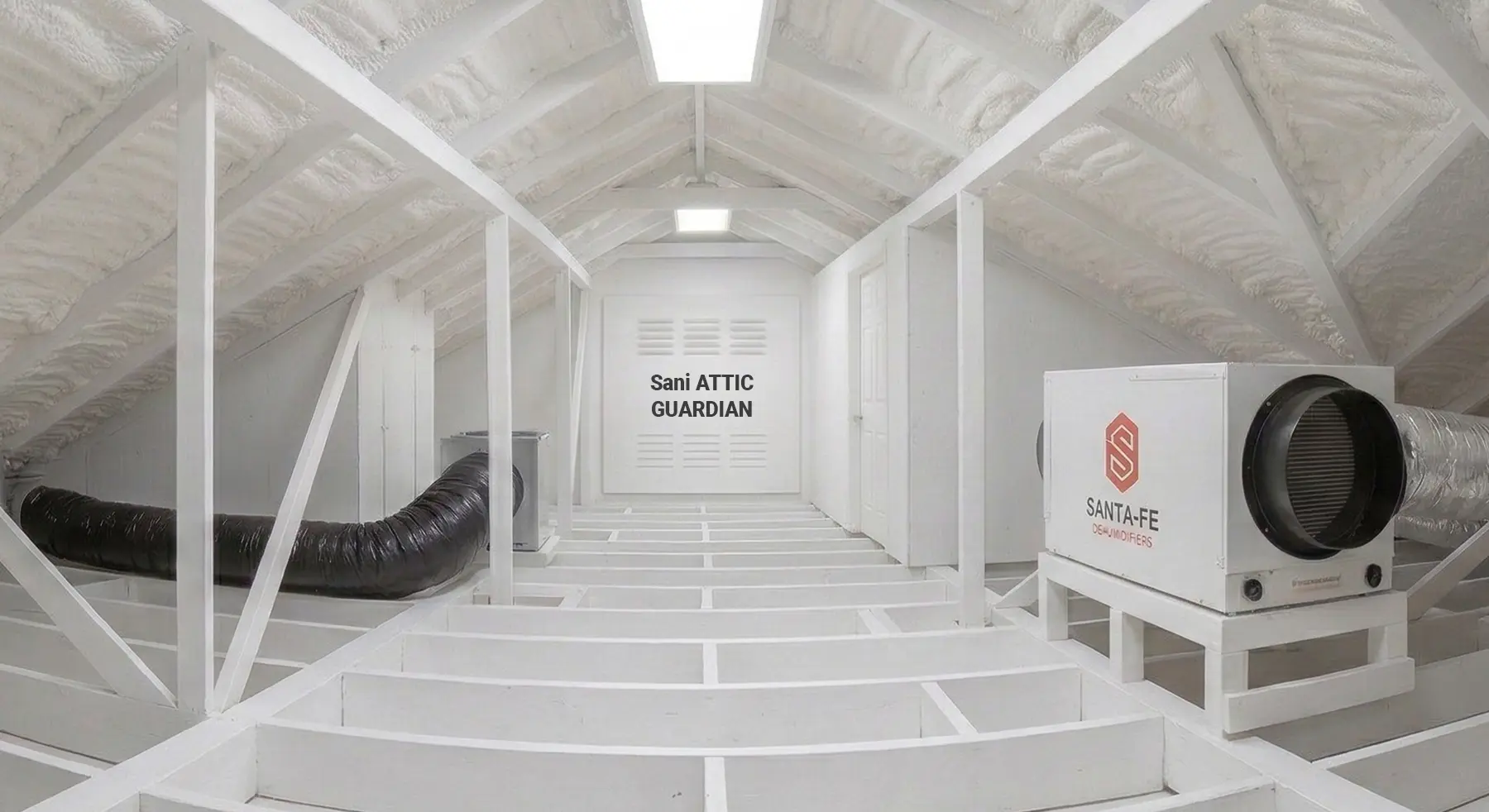
Based on building science consensus, a sealed attic requires active mechanical conditioning. We highly recommend that homeowners install a dedicated Attic Dehumidifier to maintain relative humidity below 50%, completely preventing the dew-point condensation trap from returning.
Step 3: Sani ATTIC GUARDIAN
As the ultimate complement to humidity control, we install our Sani ATTIC GUARDIAN technology. Powered by NASA-derived ActivePure® technology, it floods the sealed attic envelope with safe oxidizing molecules. This proactive system seeks out and destroys microscopic mold spores, neutralizes off-gassing VOCs, and sanitizes the air 24/7 before it can ever depressurize into your home.
Sani Attic Guardian
Professional-grade continuous purification for sealed attics.
Don't Wait Until It's Too Late
Early detection and professional remediation can prevent serious health complications and protect your property value.