
Some of the most complex, destructive moisture and microbial challenges in modern buildings are completely invisible from the finished surface. They begin quietly inside wall cavities, specifically in wet areas subjected to high-frequency moisture exposure — such as residential and commercial shower enclosures.
A bathroom shower may look spotless, sanitized, and perfectly maintained on the surface, while gallons of saturated water vapor are actively condensing, accumulating, and decaying structural elements directly behind the tile system.
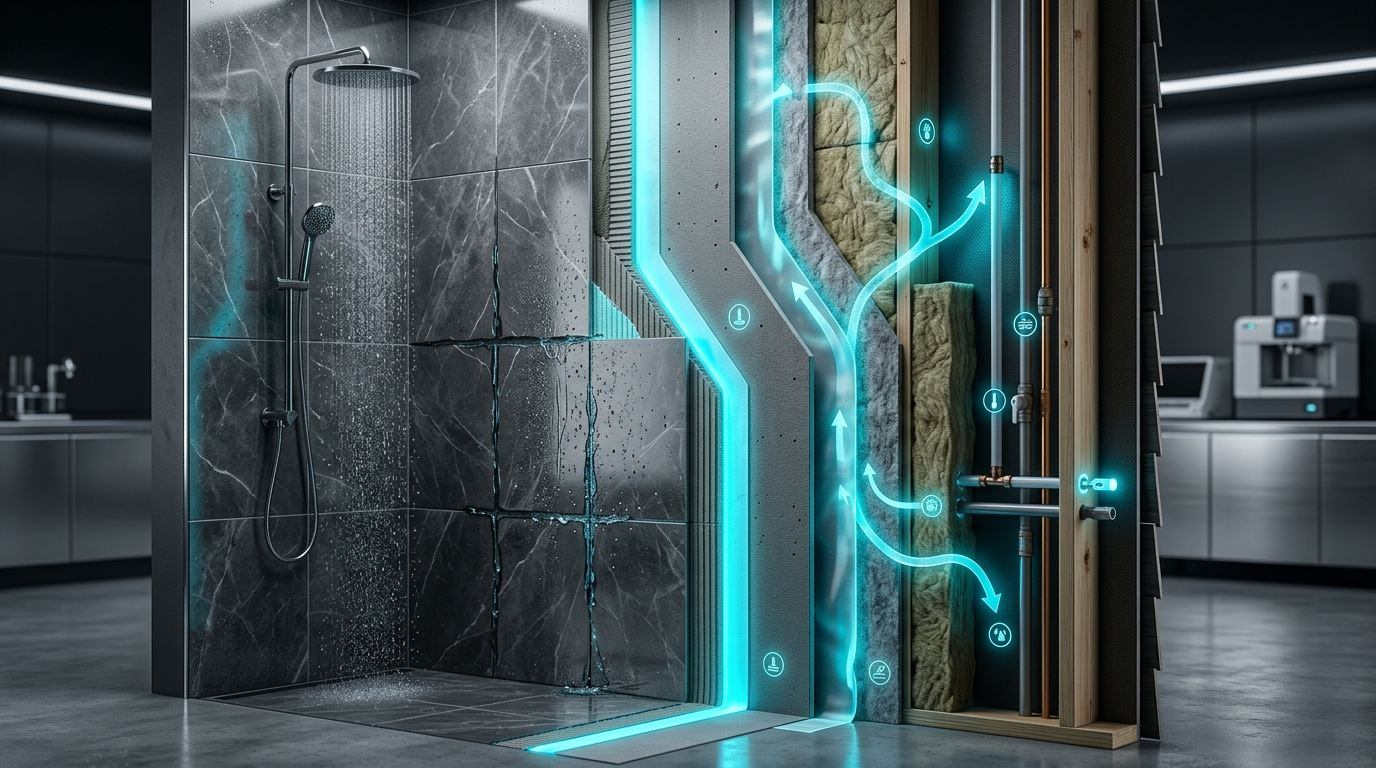
1. The Thermodynamics of Moisture: Vapor Pressure & Condensation
To understand why moisture penetrates behind tiles, we must examine the thermodynamic laws of building physics. Moisture movement inside a building envelope is governed by differences in temperature, relative humidity, and air pressure:
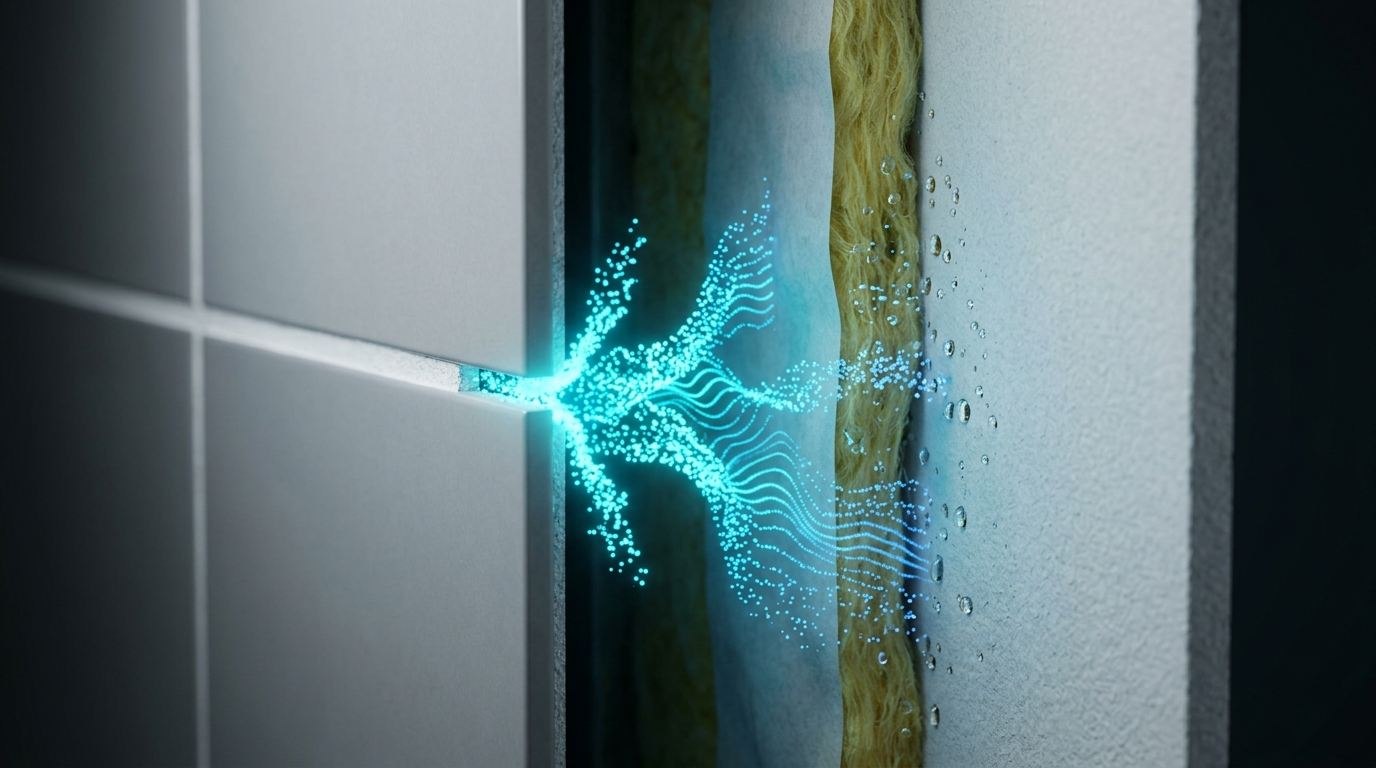
The Vapor Pressure Gradient (ΔPv)
During a hot shower, local air temperature spikes to 100°F – 105°F while relative humidity reaches 100% saturation. This generates intense local water vapor pressure. Meanwhile, the adjacent concealed wall cavity or adjoining room is cooled by air conditioning to 72°F – 74°F at 50% RH. Nature constantly seeks equilibrium: high vapor pressure aggressively forces moisture molecules toward lower vapor pressure areas through every microscopic pore, pathway, and discontinuity.
As this warm, moisture-laden vapor migrates into the cooler wall cavity, it encounters building materials (drywall paper backing, wood studs, fasteners, metal plumbing pipes) whose surface temperatures are below the ambient dew point.
When moisture vapor strikes a surface below its dew point, an immediate phase change occurs: invisible vapor transforms into liquid condensation. The wall assembly begins absorbing water from the inside out.
2. The Myth of Waterproof Grout & Failed Caulking
A hairline crack in a grout line or a detached bead of silicone caulking along the shower pan or tub transition is frequently dismissed as a minor cosmetic blemish. In reality, it represents an open breach in the primary moisture shedding plane.
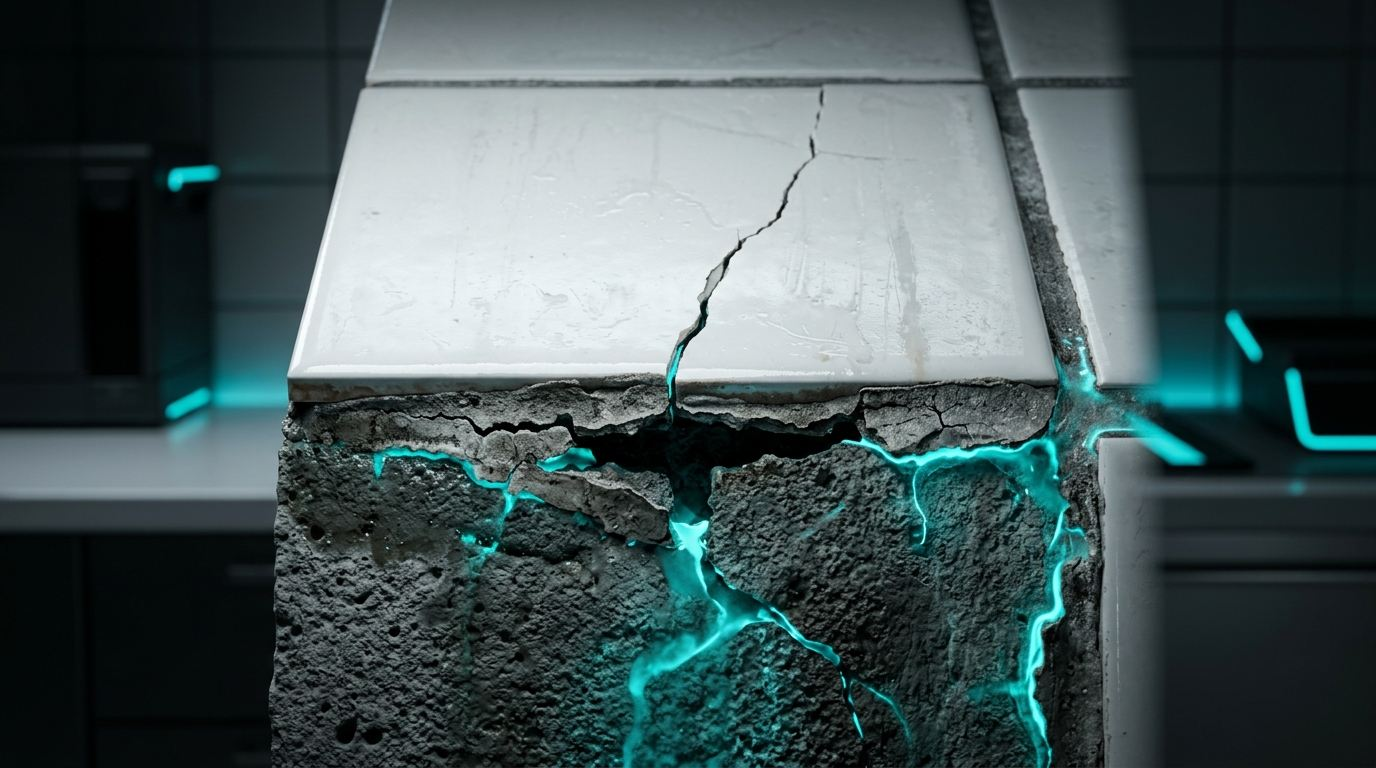
Critical Industry Fact: Grout is NOT Waterproof
According to the Tile Council of North America (TCNA), ceramic tile and cementitious grout are water-shedding finishes, not a waterproofing barrier. Grout is inherently porous and absorbs water through capillary suction. The true defense against structural water intrusion is the concealed continuous waterproofing membrane (ANSI A118.10) installed behind the tile. When that backing membrane is punctured, unsealed around plumbing penetrations, or improperly integrated with the shower pan, water migration behind the wall is guaranteed.
Repeated daily shower cycles create continuous wetting events. Because wall cavities lack direct airflow, heat, and sunlight, the rate of water entry vastly exceeds the rate of natural evaporation.
3. Why Hidden Moisture Matters: The Fungal Proliferation Equation
The surface of your shower may dry within an hour after use, but water trapped behind the waterproofing membrane can remain for weeks. This unbalances the indoor ecology:
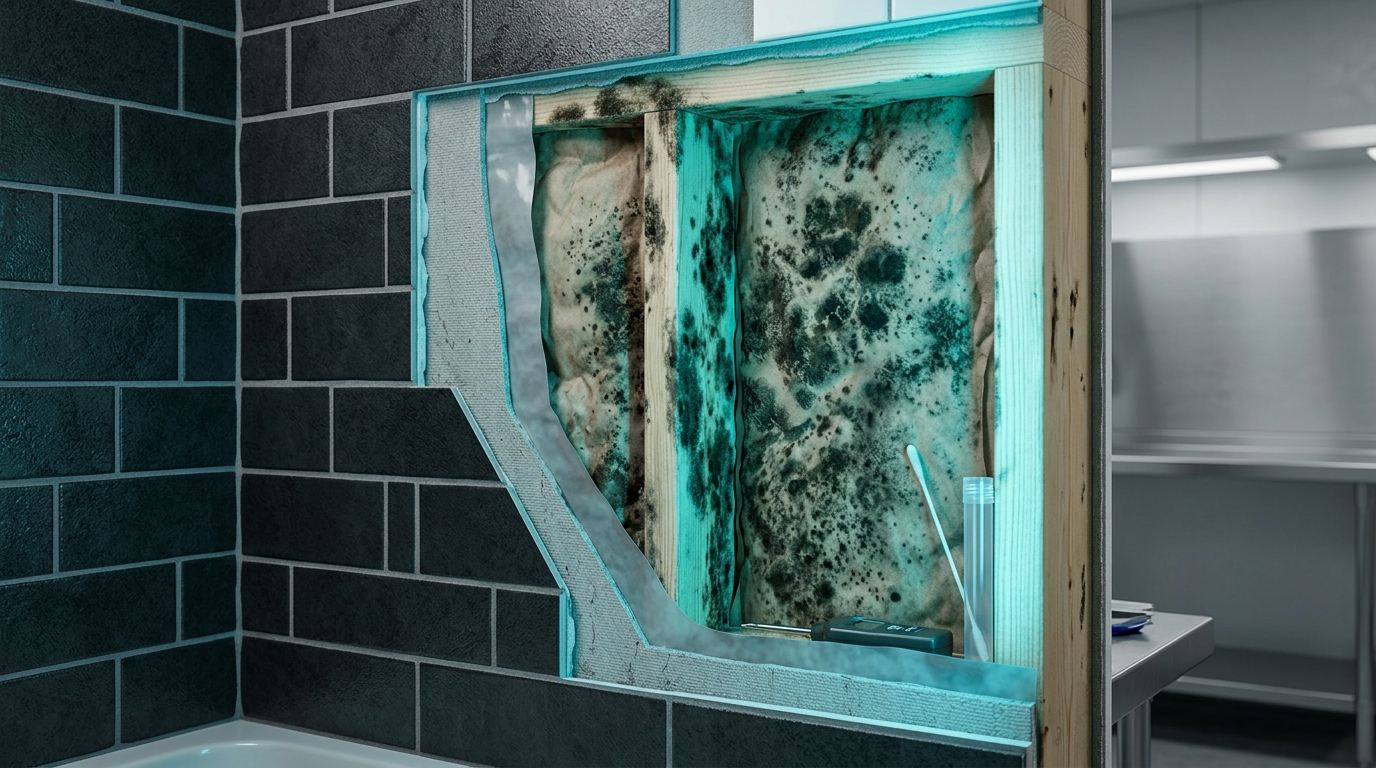
Fungal spores require a specific bio-available moisture threshold known as Water Activity (aw ≥ 0.70) to absorb water through their cell walls and sprout germination hyphae. Common materials found inside shower wall assemblies provide the ideal buffet:
- Cellulose Drywall Paper: Highly biodegradable organic food source preferred by Aspergillus, Penicillium, and Stachybotrys chartarum.
- Wood Stud Framing & Plywood Subfloors: Susceptible to lignocellulose decay fungi (dry rot and wet rot), compromising structural integrity.
- Accumulated Construction Dust & Organic Biofilms: Trapped particulate matter that sustains micro-colonies even behind cement backer boards.
Note: The presence of a cracked joint does not automatically mean active mold colonization exists today, but it is conclusive evidence of a moisture anomaly that warrants immediate diagnostic investigation before costly structural decay sets in.
4. Analysis: Clients, Home Inspectors & Property Managers
For Homeowners
Do not apply caulk over a wet crack! "Band-aid" caulking seals damp moisture inside the wall, accelerating hidden framing rot and mold growth. Demand non-invasive moisture mapping before re-tiling.
For Home Inspectors
Shift the diagnostic paradigm. The question is not just "Can I see mold?", but "Is there thermodynamic evidence of a moisture reservoir that could support hidden microbial ecology?"
For Property Managers
Hidden shower leaks are the leading cause of subfloor collapse, multi-unit tenant claims, and costly insurance denial. Regular thermal audits protect assets and minimize liability.
5. The Inspector's Challenge: Non-Destructive Investigation Protocols
How do experienced environmental diagnostic specialists determine if water has penetrated behind the tile without immediately sledgehammering the wall? They rely on advanced, non-invasive technology:
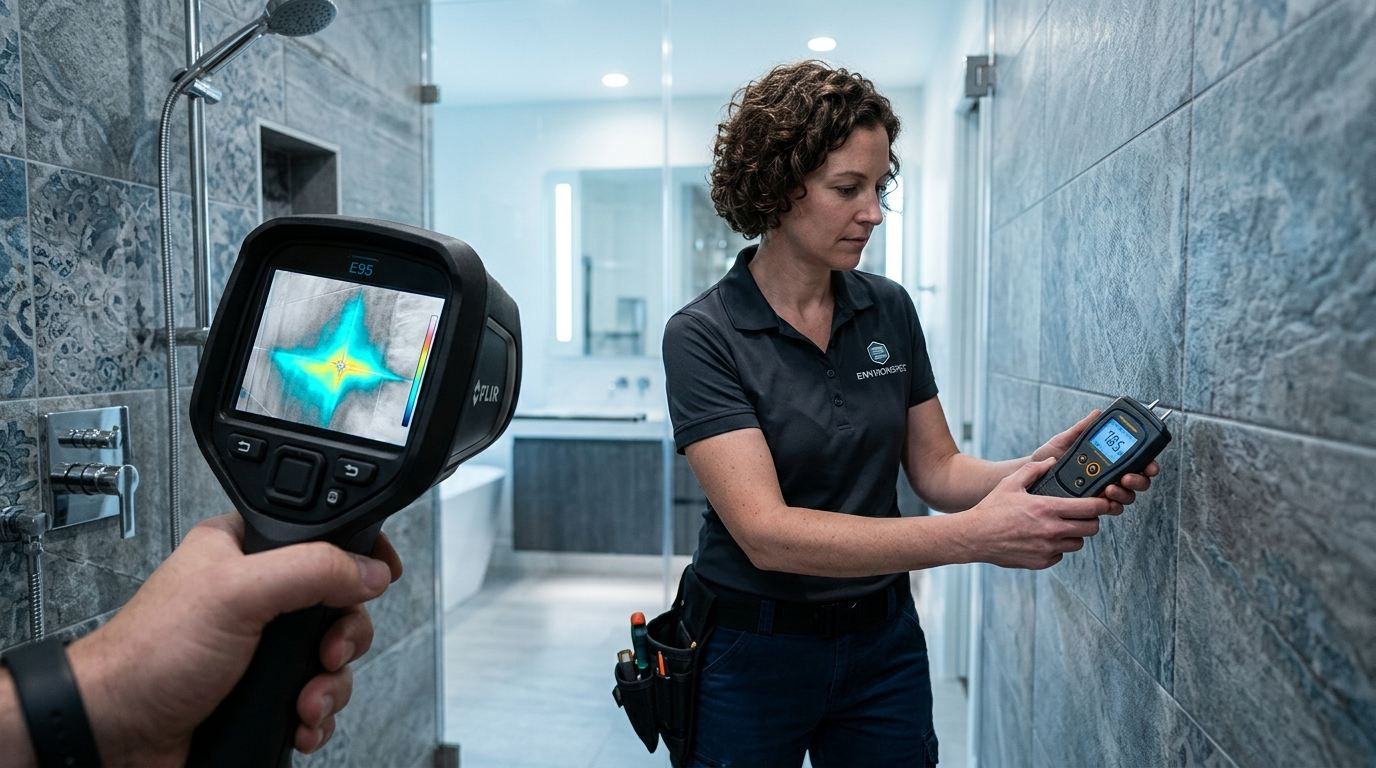
| Diagnostic Technology | Physical Principle | Field Diagnostic Value |
|---|---|---|
| High-Resolution Infrared Thermography (FLIR) | Measures thermal radiation differentials caused by evaporative cooling of damp sub-surfaces. | Pinpoints exact boundaries of moisture plumes behind tile and adjacent drywall without touching the wall. |
| Non-Invasive RF Moisture Meters | Emits radio frequency dielectric impedance signals up to 1 inch deep through ceramic tile. | Quantifies moisture percentage behind tiles relative to dry baseline standards. |
| Comparative Moisture Mapping | Measures drywall baseboards and common walls backing the shower plumbing in adjacent rooms. | Detects latent moisture migration before visible paint bubbling or baseboard swelling occurs. |
Calculate Dew Point & Spore Germination Windows
Use our online Florida Mold Growth Risk Simulator to model how bathroom relative humidity, indoor temperature, and water leaks alter spore germination timelines in real time.