
The Core Reality of Modern Building Science:
Meeting municipal building codes does NOT mean your home is healthy—it only means it is legally habitable. Standard blueprints prioritize minimum structural compliance over human respiratory physiology, creating chronic indoor environmental traps.
Have you ever paused to think if the air you breathe inside your own home is truly safe? Today, the vast majority of families live in standard-construction homes. These houses are designed with basic blueprints intended solely to satisfy minimum code regulations. However, building science proves these minimum requirements rarely protect occupant health.
Our engineering team specializes in custom environmental design to convert standard houses into biologically secure ecosystems. To achieve this, we decouple air management from traditional HVAC paradigms and implement an interconnected matrix of four independent, synergistic technological strategies aligned with international LEED v4.1 Indoor Environmental Quality (EQ) standards.
The 4-Strategy Environmental Air Matrix
| Strategy & Technology | The Standard Problem | SaniEffect Engineering Solution | Biological & Health Outcome |
|---|---|---|---|
| 1. Pressurized Ventilation ASHRAE 62.2 | Natural infiltration & negative pressure ("syringe effect") pulling damp outdoor air into hidden wall cavities. | Automated biosensor exhaust fans + dedicated returns + 2-3 Pa Positive Pressure fresh air make-up. | 100% Interstitial Condensation Shield |
| 2. Dedicated Dehumidification 45-50% RH Target | AC "short cycling" leaves high water vapor (RH >60%), creating clammy air and massive allergen growth. | Whole-house dedicated dehumidifier operating independently from thermal thermostat control. | 98% Dust Mite Dehydration Mortality |
| 3. Decoupled Filtration True HEPA & Carbon | Dense AC filters choke system static pressure (TESP), causing frozen coils and blower motor burnout. | Separate turbine filtration unit cycling room air 50-60x/day through HEPA (99.97%) & Carbon Bed. | 65% ER Asthma Visit Reduction |
| 4. Zero-Ozone Active UVGI UL 2998 Certified | Passive filters miss floating viruses; electronic purifiers/ionizers emit lung-toxic Ozone ($O_3$). | Duct-integrated 253.7nm UV-C germicidal irradiation with zero ozone validation (< 5 ppb). | 99.9% Viral & Bio-Spore Photodimerization |
Scientific Ventilation, Localized Exhaust & Pressure Dynamics
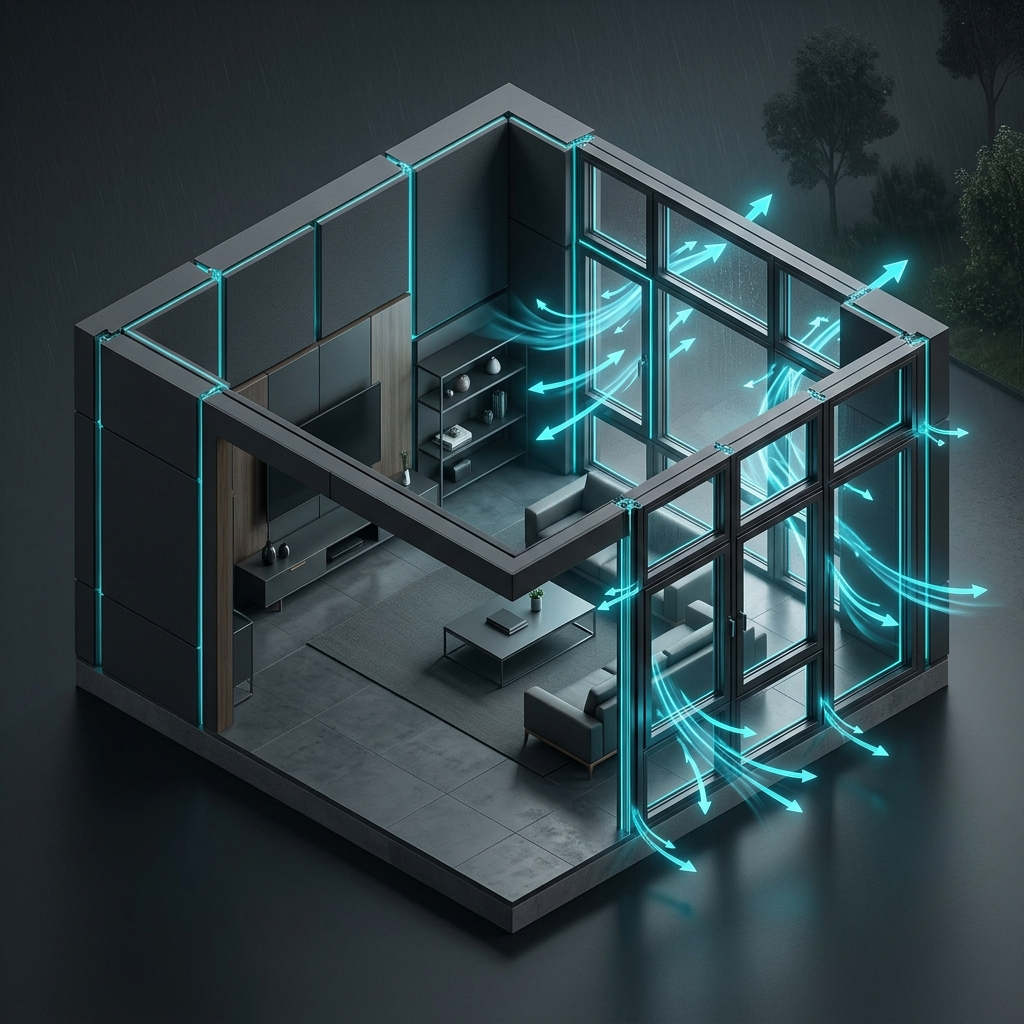
Figure 1: SaniEffect slight positive pressure (2-3 Pa) creates an aerodynamic shield blocking humid infiltration.
The Standard Problem: Inefficient Exhaust & Negative Pressure ("The Syringe Effect")
Conventional ventilation wrongly assumes natural infiltration through cracks or sporadic bath fan usage is sufficient. In standard homes, mechanical extraction (bathroom fans, kitchen hoods, clothes dryers) operates without balanced make-up air. This turns the entire house into a mechanical "syringe," drawing hot, humid outdoor air inside through micro-cracks in walls, outlets, and window frames.
In hot, humid climates like Florida, this infiltration triggers catastrophic interstitial condensation: outdoor water vapor meets cool interior surfaces inside wall cavities, drenching insulation and wood studs. Toxic mold, bacterial biofilms, and structural wood rot proliferate invisibly behind drywall long before homeowners notice smells or visible spots.
Our Engineering Strategy: ANSI/ASHRAE Standard 62.2-2022
- Automated Biosensor Exhaust: Installation of ultra-quiet 80–100 CFM exhaust fans powered by Electronically Commutated Motors (ECM) with relative humidity and motion sensors that activate automatically upon detecting shower steam.
- Dedicated Source Returns: Strategic return ducts in laundry rooms and master closets to capture stagnant moisture pockets and textile dust before they migrate into living spaces.
- Fresh Air Positive Pressurization: A dedicated Fresh Air Make-Up duct introduces filtered, pre-conditioned outdoor air. By forcing in slightly more air than exhausted, we maintain a 2 to 3 Pascal positive pressure shield—gently pushing conditioned air outward through building leaks and completely preventing interstitial wall condensation.
Dedicated Dehumidification & Pathological Biomass Control
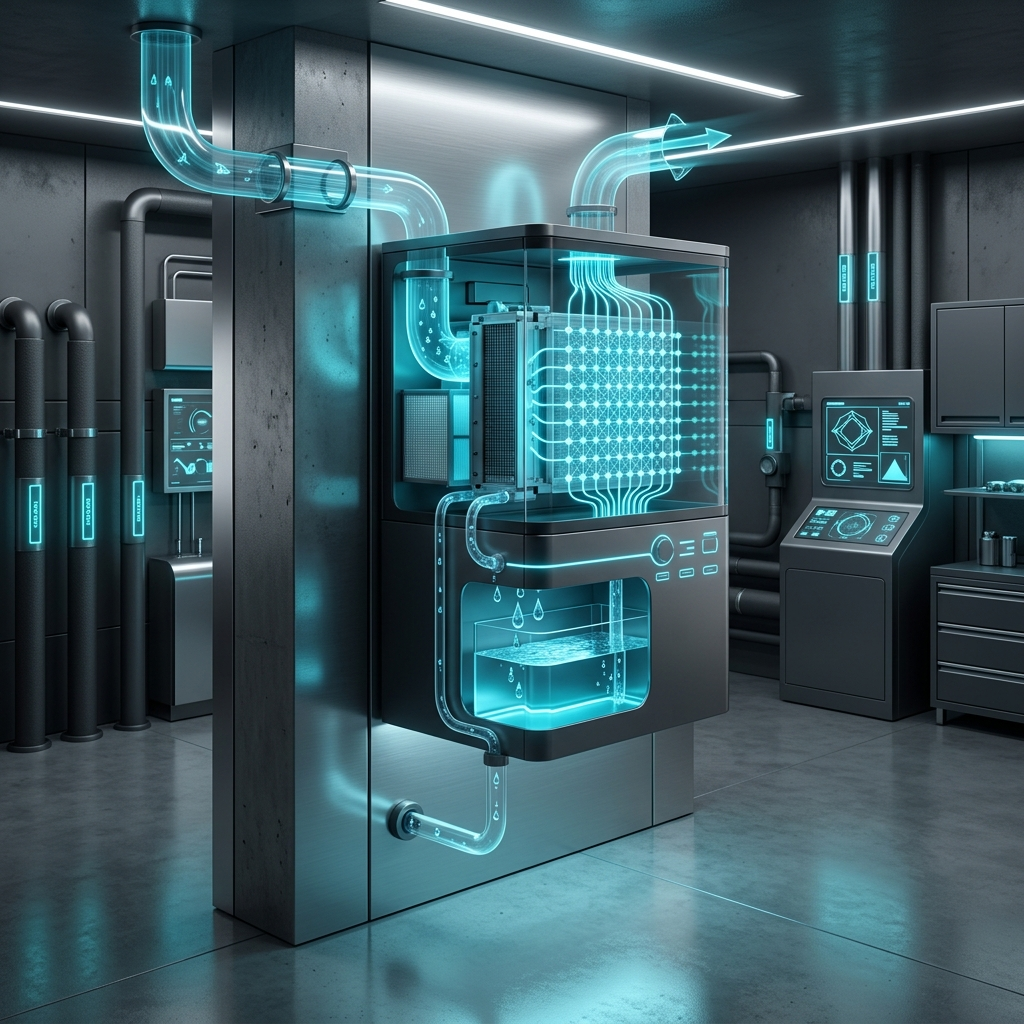
Figure 2: Whole-home dedicated dehumidification maintains a strict 45-50% RH biological boundary.
The Standard Problem: "Short Cycling" & Clammy Indoor Air
Standard central air conditioners are built with a Sensible Heat Ratio (SHR) of 0.70 to 0.80, allocating 70-80% of energy to lowering dry-bulb air temperature and only 20-30% to pulling out water vapor. In modern energy-tight homes, the thermostat satisfies temperature quickly, shutting the AC down prematurely ("short cycling"). Because the cooling coil requires 10-15 minutes of uninterrupted operation to drain water, moisture remains trapped inside, causing cold, clammy air with relative humidity exceeding 60%.
Standard AC Unit (SHR 0.75)
Reaches thermostat temp fast, shuts off early, leaves moisture trapped (RH >60%).
SaniEffect Dedicated Dehumidifier
Decoupled humidistat extracts water vapor continuously until RH reaches 45-50%.
The Biological Barrier at 45–50% Relative Humidity
Lethal Dust Mite Desiccation
House dust mites comprise 70–75% water and do not drink liquids; they extract ambient water vapor through specialized supracoxal glands. Maintaining RH below 50% deprives their glands, causing fatal cutaneous water loss. Studies show RH <51% reduces viable mite populations by 98% within months.
Xerophilic Mold Inhibition
Pathogenic molds (Aspergillus, Penicillium, Cladosporium) require surface water activity and RH >60-70% to germinate spores. Controlling RH strictly between 45-50% removes the essential moisture catalyst, preventing mold colonization on walls and furniture.
Independent High-Efficiency Filtration (HEPA & Carbon)
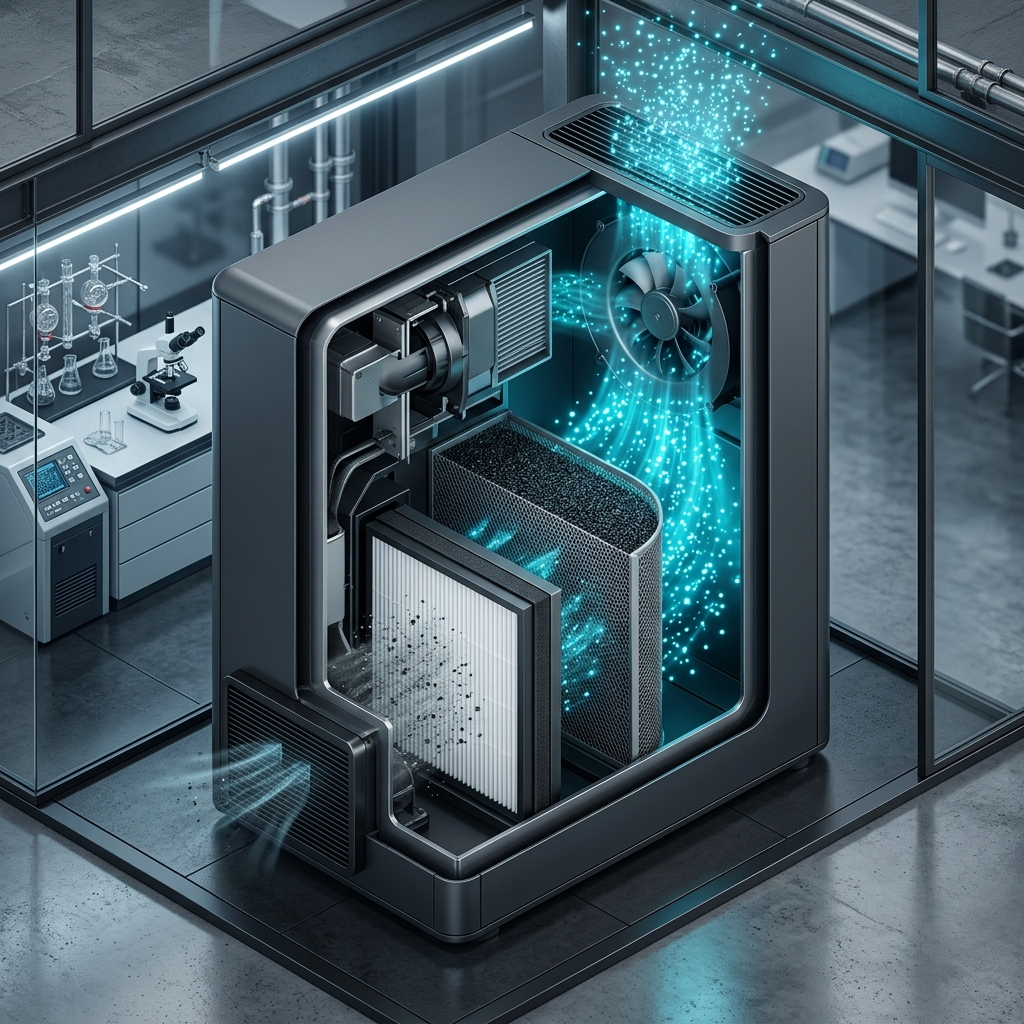
Figure 3: Dual-stage True HEPA and Activated Carbon filtration operating independently from main HVAC static pressure.
The Standard Problem: The AC Filter Myth & TESP Pressure Choking
Standard AC filters exist solely to protect mechanical coils from coarse dust—not to clean human lungs. When homeowners insert thick MERV 11–16 filters directly into the AC slot, Total External Static Pressure (TESP) spikes dangerously. This chokes airflow, freezes evaporator coils, quadruples blower power draw, and accelerates compressor failure.
| Filtration Approach | Static Pressure (TESP) Impact | Airflow (CFM) & Energy Effect | Filtration & IAQ Efficacy |
|---|---|---|---|
| Dense Filter in AC Slot (MERV 13+) | Extreme Spike (>0.8" w.c.) | Choked airflow, frozen coil, blower motor overheating & high electric bills. | Poor whole-house air turnover due to reduced CFM. |
| SaniEffect Decoupled Unit (True HEPA + Carbon) | Zero AC Impact (0.0" w.c. added) | AC runs at peak SEER efficiency with standard MERV 8 coil guard. | 99.97% particle capture @ 0.3 microns; 50-60 air changes/day. |
Dual-Stage Matrix: Pediatric Asthma & VOC Reduction
Mechanical True HEPA (99.97%)
Captures fine particulates down to 0.3 microns (PM2.5, soot, fragmented dust mite bodies, viral aerosol carriers). Large-scale pediatric asthma clinical trials (HAPI/AAA studies) prove independent HEPA filtration reduces fine indoor particles by up to 89%, yielding a 65% lower risk of emergency clinical visits.
Activated Carbon Chemical Bed
Gases and Volatile Organic Compounds (VOCs) pass straight through HEPA filters. Our heavy activated carbon bed uses physical adsorption (Van der Waals forces) to capture carcinogenic Formaldehyde and TVOCs—ensuring compliance with strict LEED v4.1 thresholds (Formaldehyde < 27 ppb, TVOCs < 500 $\mu g/m^3$).
Active Purification through Zero-Ozone UVGI (253.7 nm)
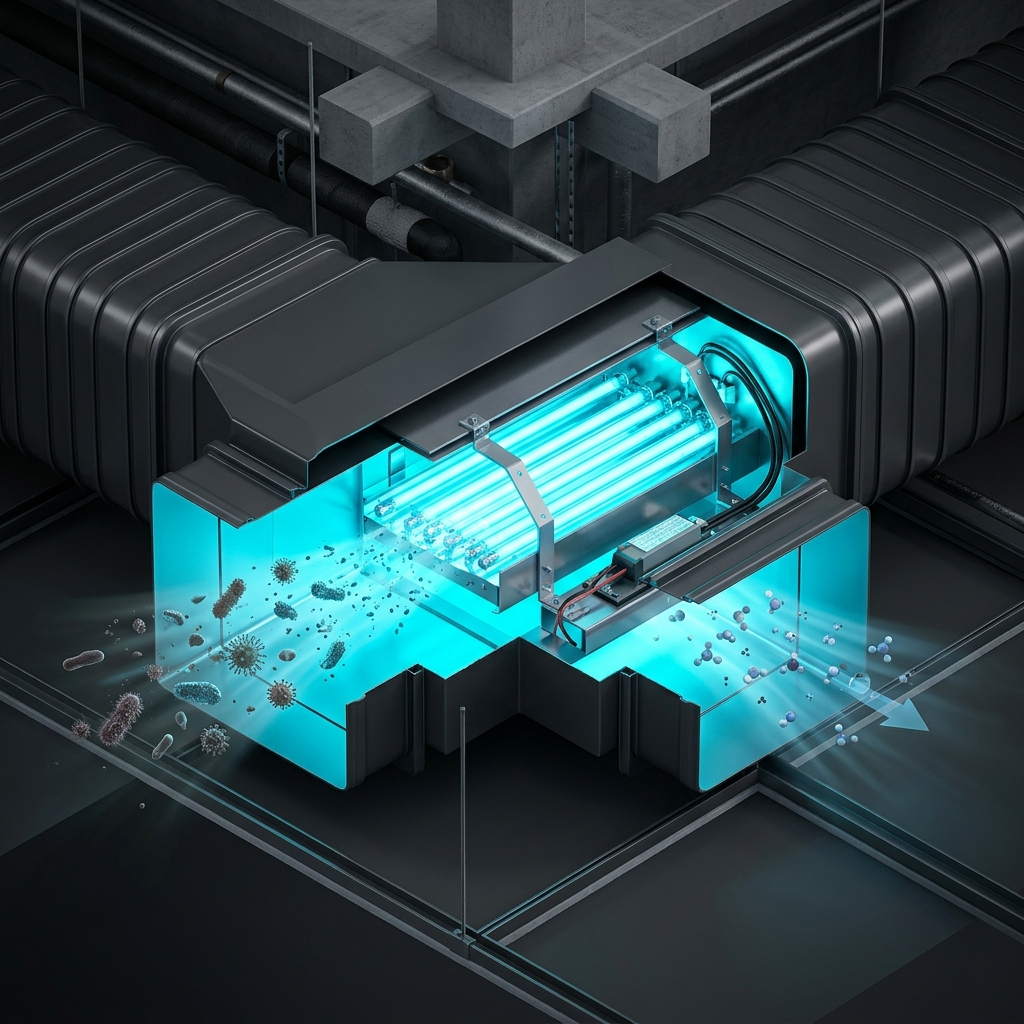
Figure 4: Duct-integrated UVGI germicidal irradiation chamber destroying viral and fungal DNA without ozone generation.
The Standard Problem: Electronic Purifiers Generating Toxic Ozone ($O_3$)
Air filters passively trap dust, but cannot destroy active viruses or mold spores suspended in air currents. However, many commercial air purifiers (bipolar ionizers, plasma units) release toxic Ozone ($O_3$) into living spaces. Ozone is an aggressive lung irritant causing airway inflammation, reduced lung capacity, and severe asthma attacks. Moreover, Ozone reacts with household VOCs to form secondary toxins like formaldehyde and ultrafine aerosols.
UL 2998 Certified Zero-Ozone UV-C Technology (253.7 nm)
We integrate Ultraviolet Germicidal Irradiation (UVGI) lamps calibrated precisely to the 253.7 nanometer (UV-C) wavelength inside the return duct of our independent filtration system.
The "Photon Shading" Synergy Effect
Active UVGI purification requires clean airflow. If air contains floating dust, pathogens hide in "dust shadows" (photon shading) and escape radiation. By placing Strategy 3 (HEPA/Carbon) upstream, air is optically clarified before entering the UV-C chamber, allowing germicidal rays to strike and destroy pathogens with maximum efficiency.
LEED v4.1 Indoor Environmental Quality (EQ) Alignment Matrix
Integrating these four strategies transforms any residential property into a high-performance habitat that satisfies and exceeds key LEED v4.1 credits:
LEED EQ Credit: Enhanced IAQ
Achieved via ASHRAE 62.2 positive pressure ventilation and continuous 50-60x daily air filtration turnover.
LEED EQ Credit: Thermal & Moisture Comfort
Achieved by decoupling latent dehumidification (45-50% RH) from thermal AC cooling.
LEED EQ Credit: Low-Emitting Materials & Zero Toxins
Achieved via Activated Carbon VOC/Formaldehyde adsorption & UL 2998 zero-ozone verification.
Scientific References & Building Standards
- U.S. Green Building Council (USGBC). LEED v4.1 Residential Building Design and Construction Assessment System (Indoor Environmental Quality).
- ANSI/ASHRAE Standard 62.2-2022: Ventilation and Acceptable Indoor Air Quality in Residential Buildings.
- ANSI/ASHRAE Standard 185.1-2020: Method of Testing UVC Lights for Use in Air-Handling Units or Air Ducts to Inactivate Airborne Microorganisms.
- UL 2998 Environmental Claim Validation Procedure for Zero Ozone Emissions from Air Cleaners (<0.005 ppm).
- U.S. Environmental Protection Agency (EPA). Residential Air Cleaners: A Technical Summary (3rd Edition).
- Institute of Medicine (IOM). Damp Indoor Spaces and Health. National Academies Press.
- Arlian, L. G., et al. "Reducing relative humidity control house dust mites in homes." Journal of Allergy and Clinical Immunology.
- Childhood Asthma Management Program (CAMP) & HAPI Pediatric HEPA Interventions Studies.
Is Your Home Air Engineering Protecting Your Family?
Schedule a comprehensive Environmental Air Quality & Pressure Assessment. Our certified building science engineers will evaluate your property's ventilation, humidity dynamics, and filtration needs.