Proudly Serving Port Saint Lucie & Palm Beach
Call Now Email Us Book Free
Sani-REMEDIATE

Attic Mold Remediation

Professional decontamination to protect your home's structural integrity.
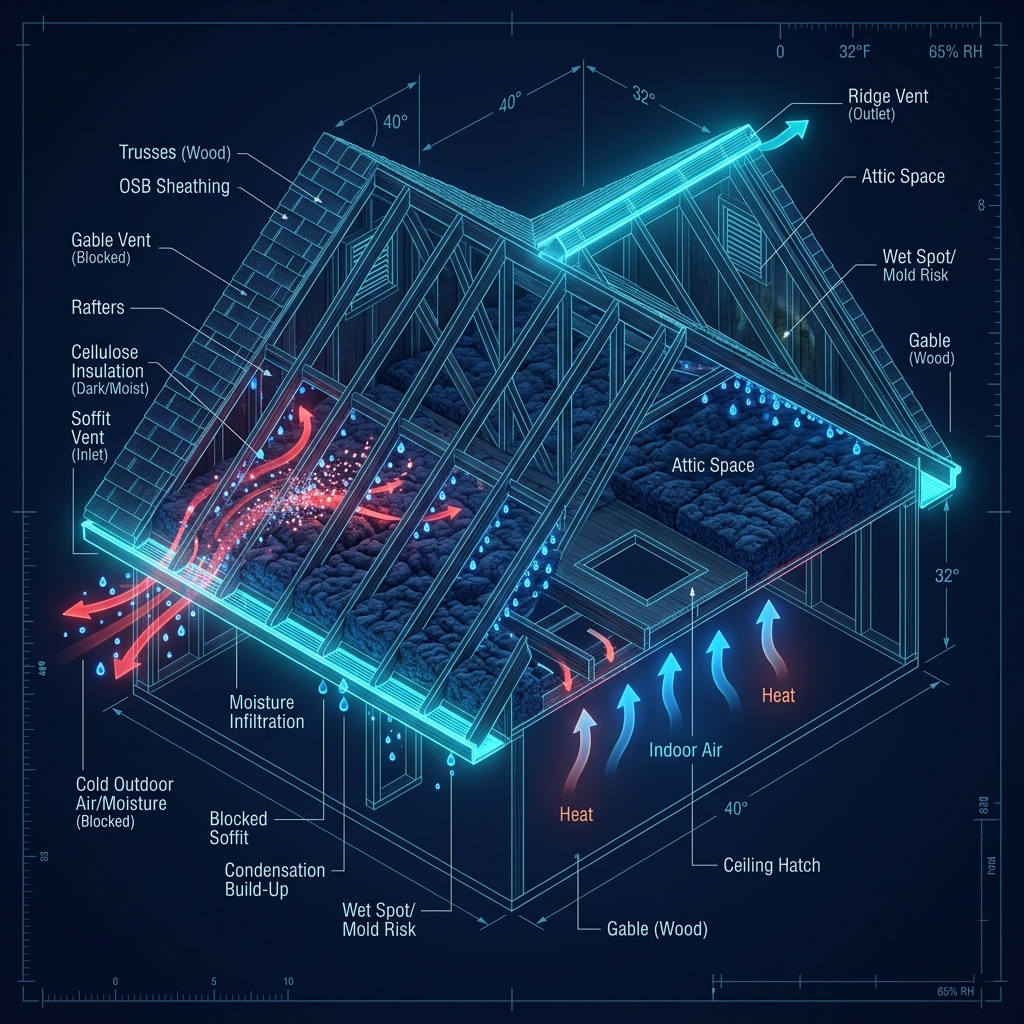
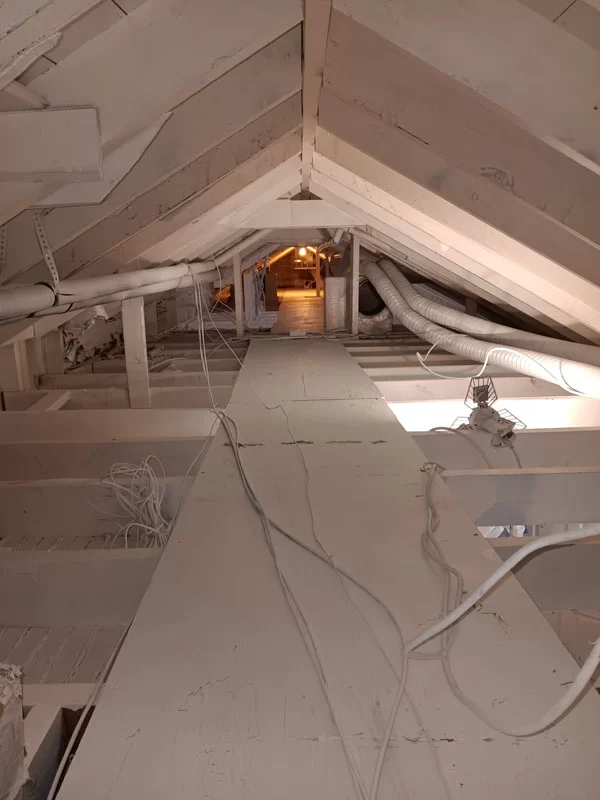
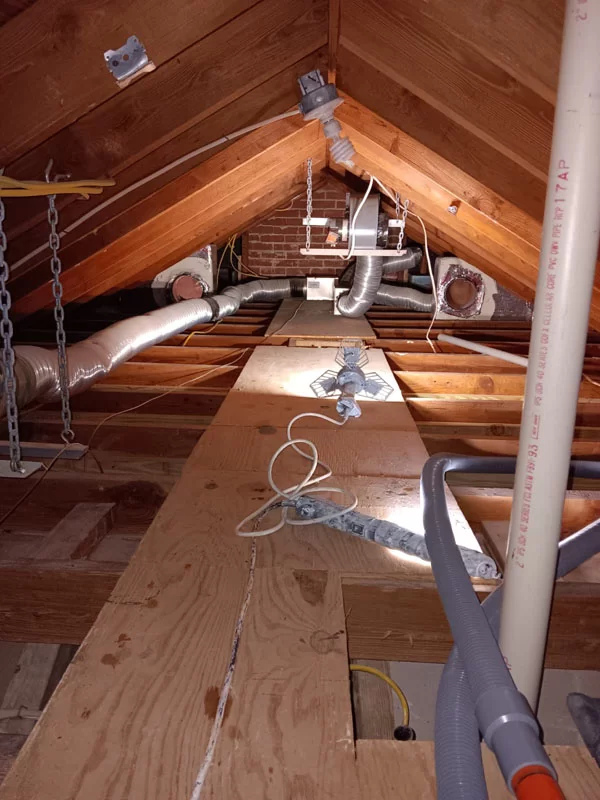
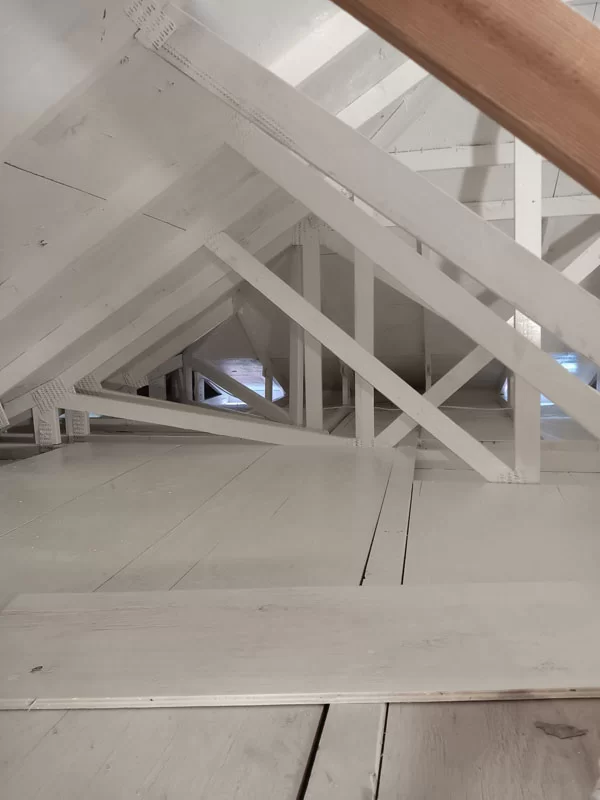
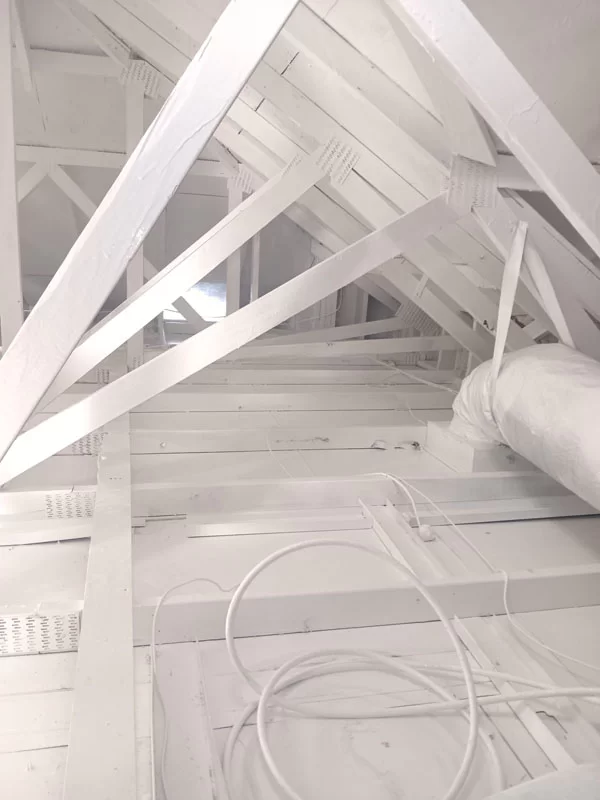
Traditional Vented Attic
The Problem

Problems in Traditional Vented Attics

While a vented attic is the standard design for many Florida homes, this system has critical flaws that facilitate mold growth if not rigorously managed. Unlike closed-cell insulation, a vented attic constantly interacts with the outdoor climate, creating the following risks:

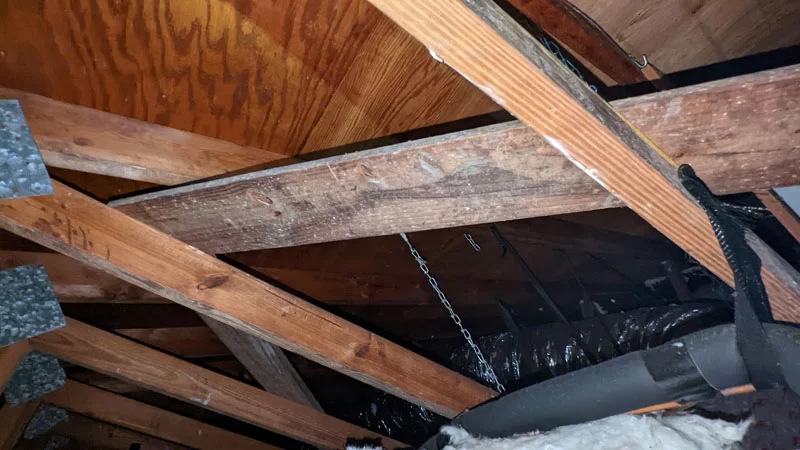
  • Dew Point and Condensation: During Florida's humid summers, hot, moisture-laden air enters through the soffits and strikes the cold surfaces of the AC system (ducts and air handlers). This creates constant condensation that soaks the trusses, rafters, and fiberglass insulation.
  • Obstructed or Insufficient Ventilation: Often, excess insulation or animal nests block the soffit vents. Without constant airflow, moisture becomes trapped, turning the attic into an "incubator" for mold spores.
  • Outdoor Moisture Infiltration: During storms or high-humidity days, the ventilation system allows mold spores from the outside to enter directly. If dust and moisture accumulate on the wood, fungal growth is inevitable.
  • Thermal Leaks (Stack Effect): If the seal between the living space and the attic is compromised, warm air moves upward, cooling the wood and causing humid attic air to condense on structural elements.
The Hidden Danger

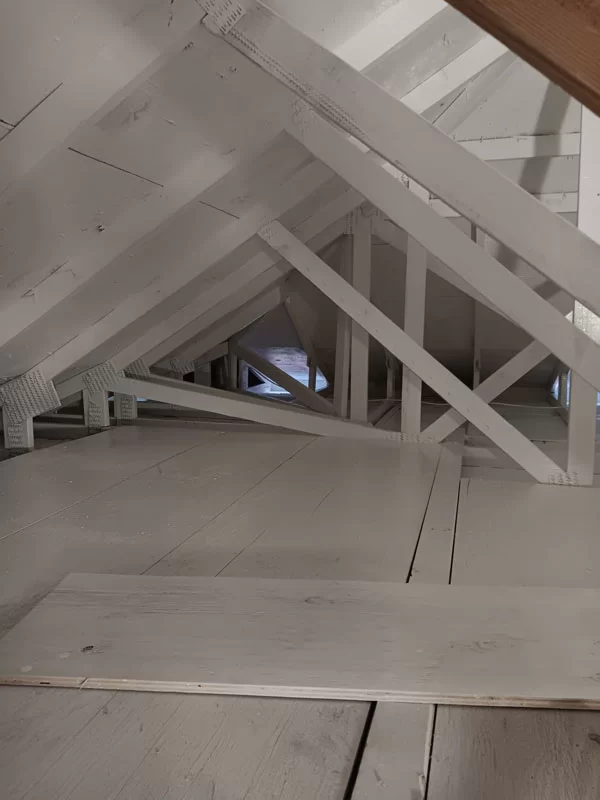
Attic with Spray Foam Insulation Problems:

While spray foam insulation is popular for its energy efficiency, especially in hot and humid climates like Florida, it can also create hidden issues if not properly installed or maintained:
  • Moisture and Mold: Lack of ventilation traps humidity, creating ideal conditions for mold growth.
  • VOCs and Air Quality: Spray foam can emit volatile organic compounds (VOCs) that negatively impact indoor air quality and health.
  • Persistent Odors: Poor installation may cause strong odors that seep into living areas.
  • Mycotoxins: When mold is present, dangerous toxins can be released into the indoor environment.
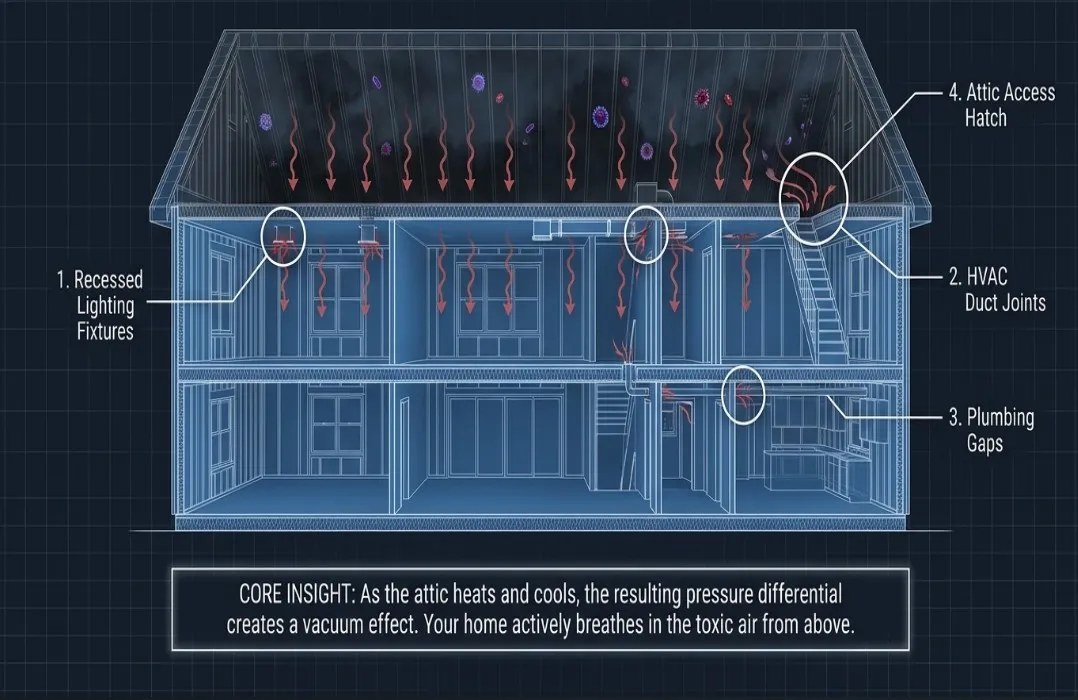
  • Contaminated Air Filtration: High attic temperatures create pressure and decompression cycles that push hot, contaminated air into the living spaces.
  • Air Pressure & Contamination: Heat buildup in the attic creates pressure that forces contaminated air into the living space or HVAC system.
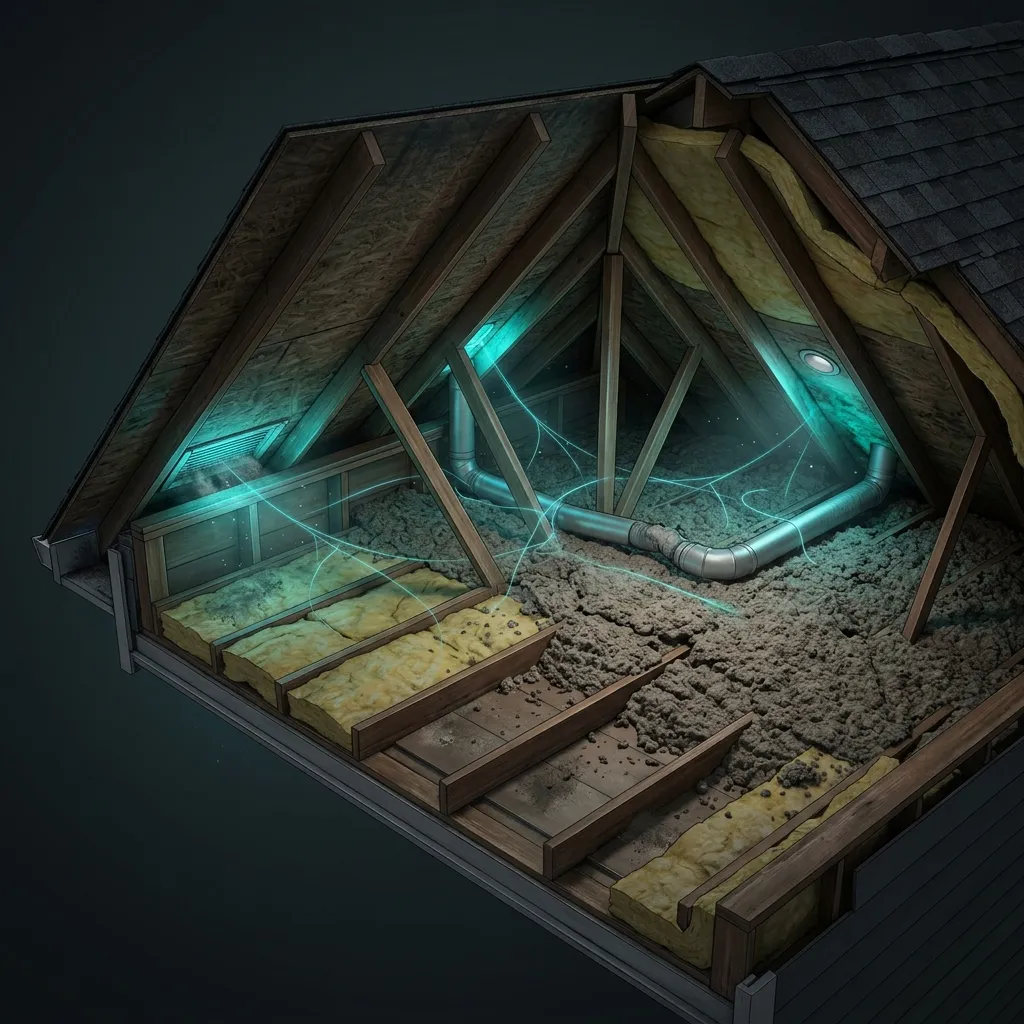
Attic Vacuum Effect Blueprint

Sani Attic Mold Remediation Solutions

Ensures your home is fully decontaminated, safe, and shielded against future outbreaks.
Phase 1: Inspection & Testing - Sani Effect Remediation Protocol
Phase 1

Inspect & Testing

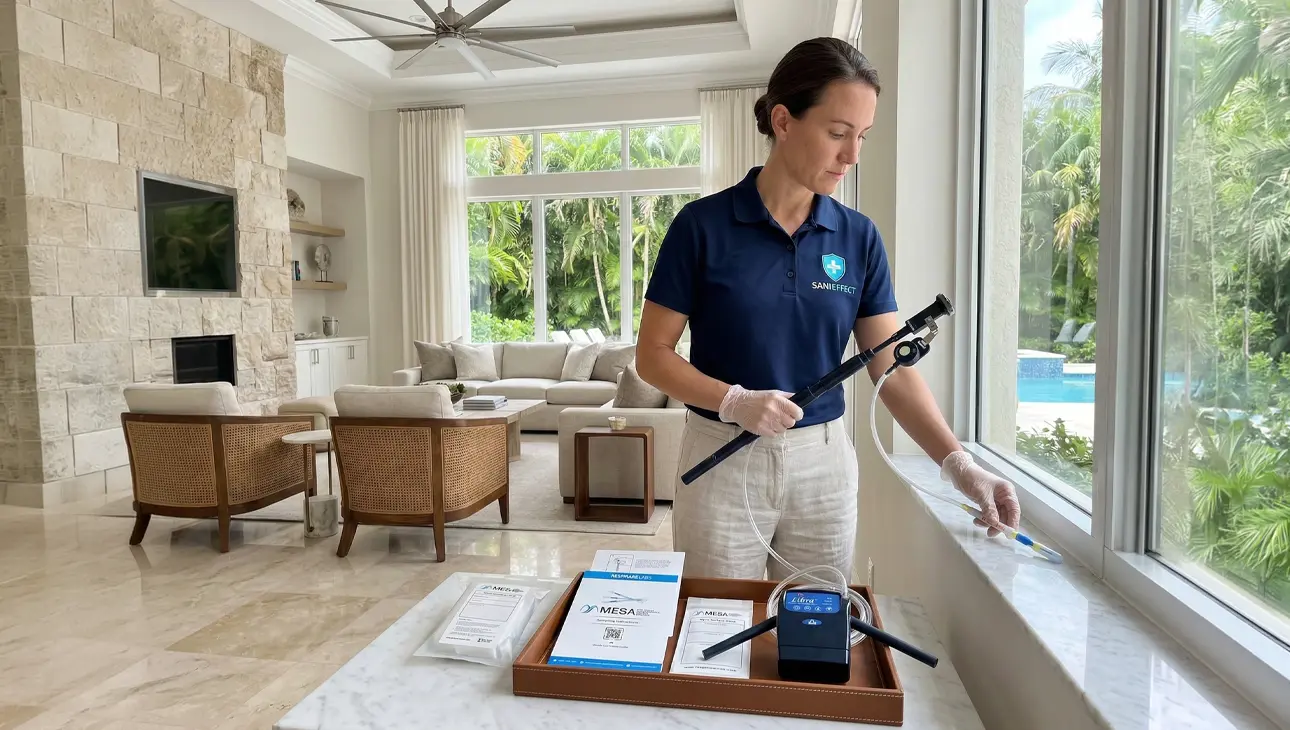
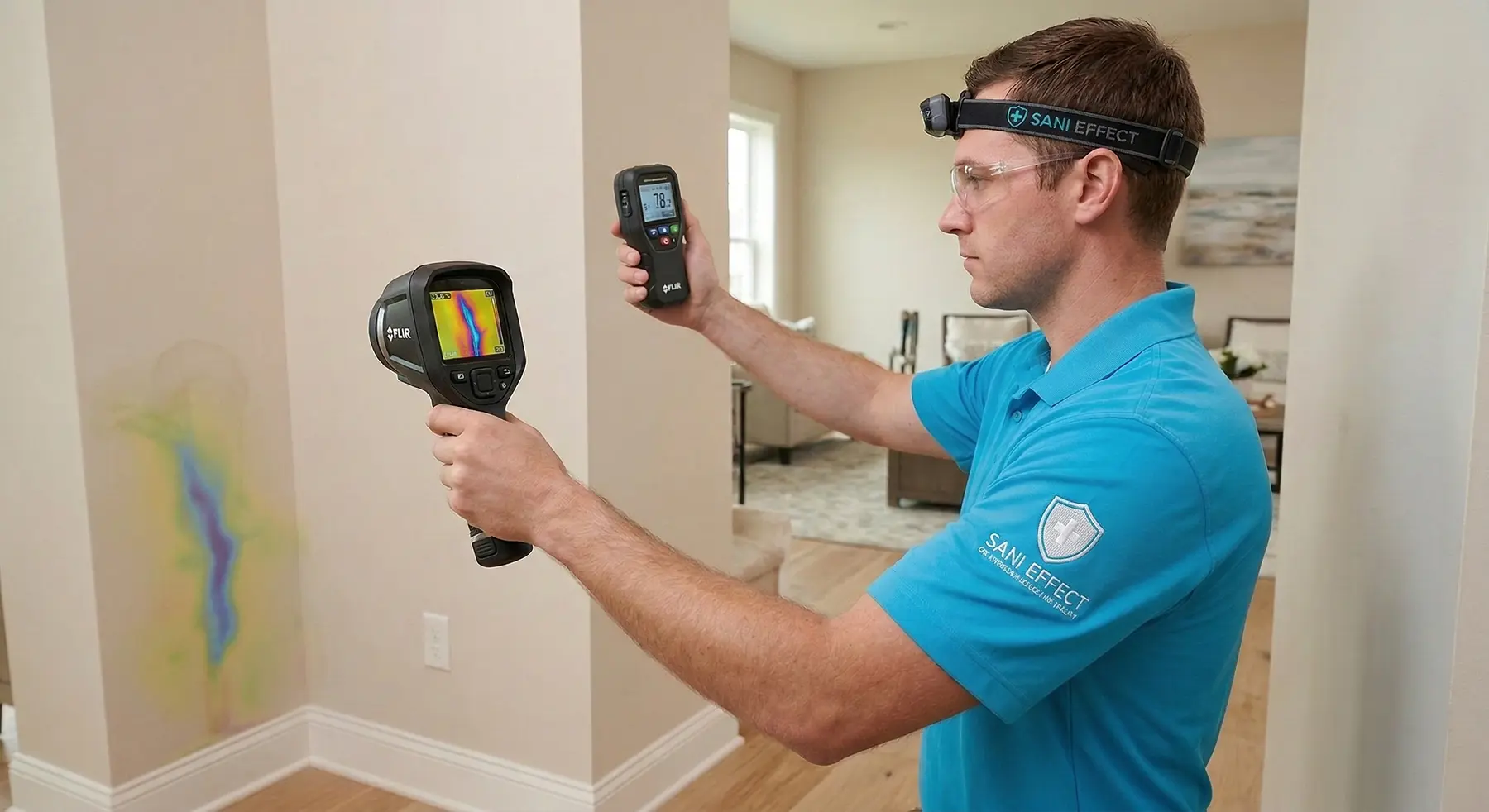
Comprehensive evaluation via Sani Effect using thermal imaging & moisture mapping to detect hidden issues. We also conduct professional air and surface sampling submitted to independent labs.
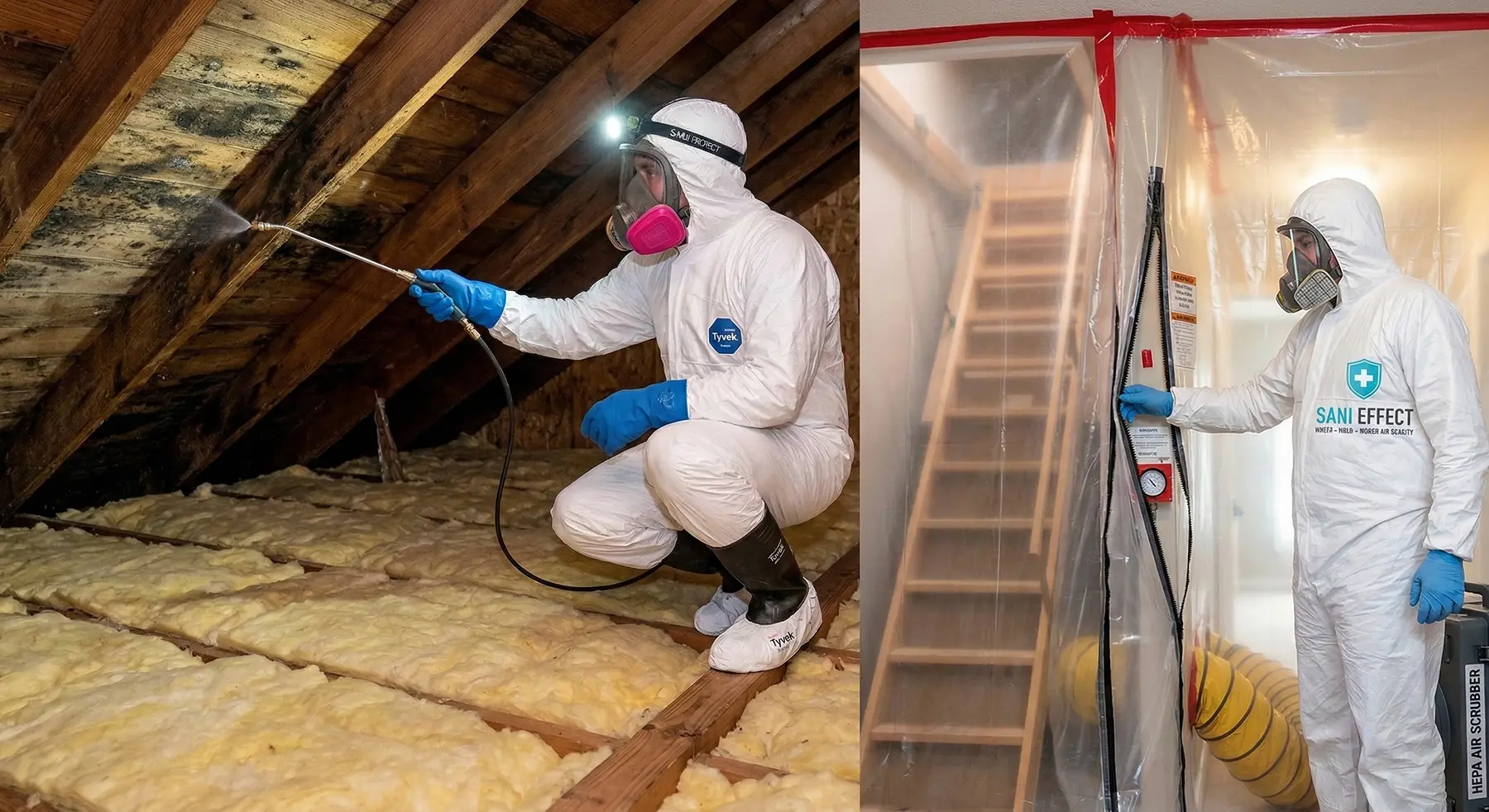
Phase 2: Containment & Negative Air Pressure - Sani Effect Remediation Protocol
Phase 2

Protect & Containment

Containment partitioning and negative air creation using HEPA scrubbers to prevent cross-contamination. Technicians wear disposable coveralls, chemical-resistant gear, and P-100 respirators.
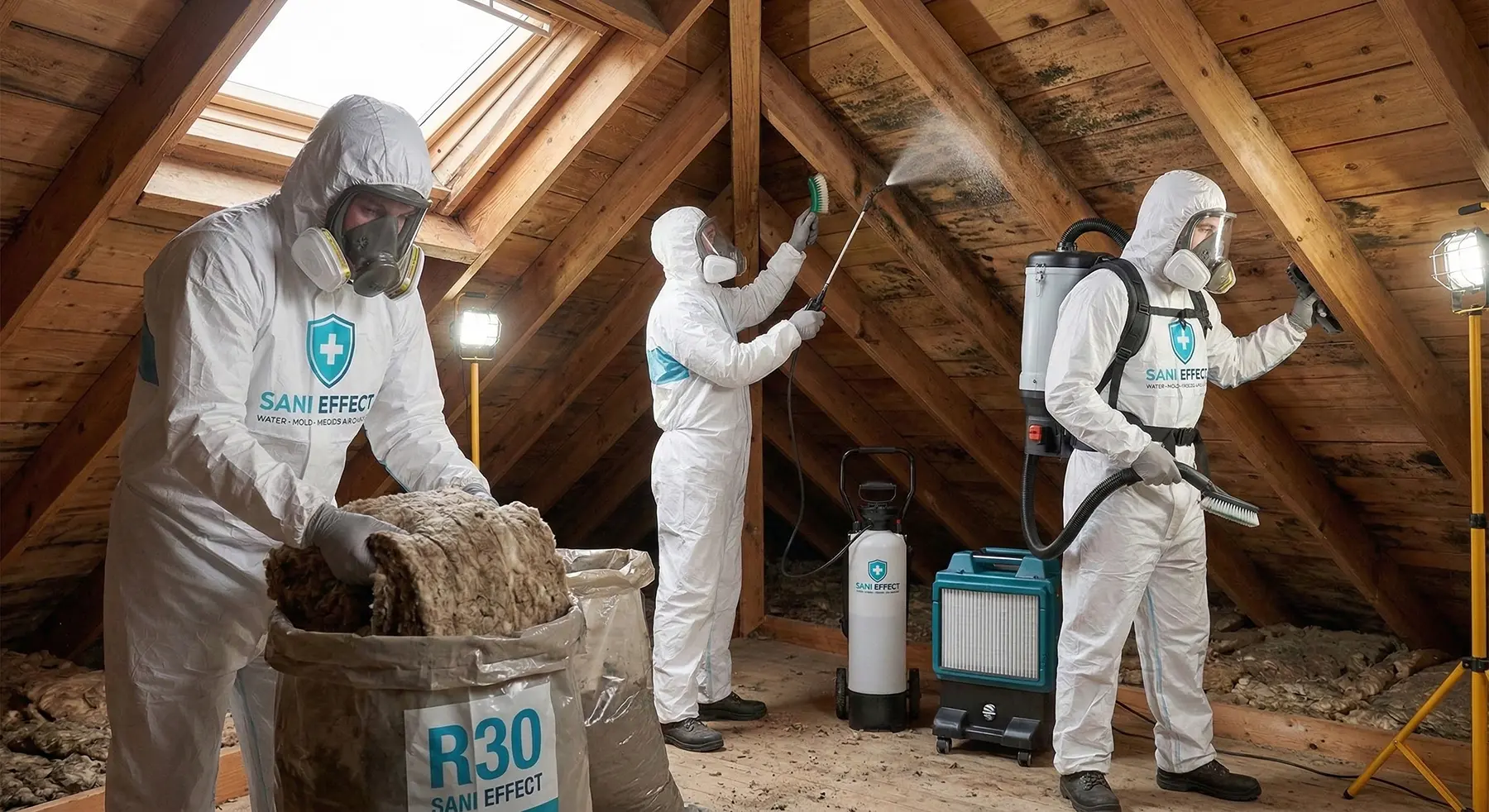
Phase 3: Source Removal & HEPA Bio-Washing - Sani Effect Remediation Protocol
Phase 3

Surgical Removal & Cleaning

Surgical extraction of affected materials. Surfaces are sprayed with proprietary plant-based biocides and meticulously HEPA vacuumed to remove mold at its roots.
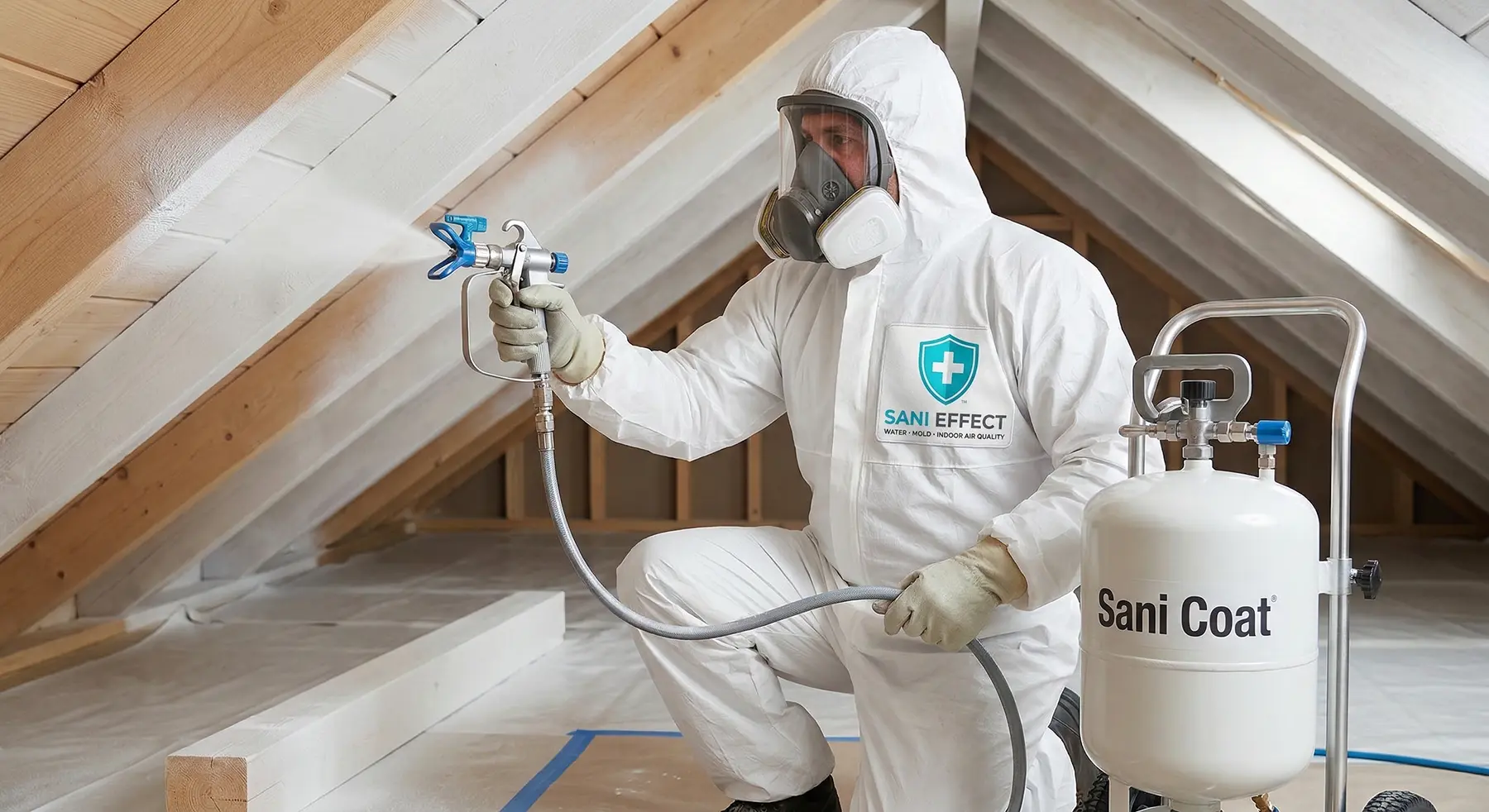
Phase 4: Air Scrubbing & Hydroxyl Treatment - Sani Effect Remediation Protocol
Phase 4

Drying & Encapsulation

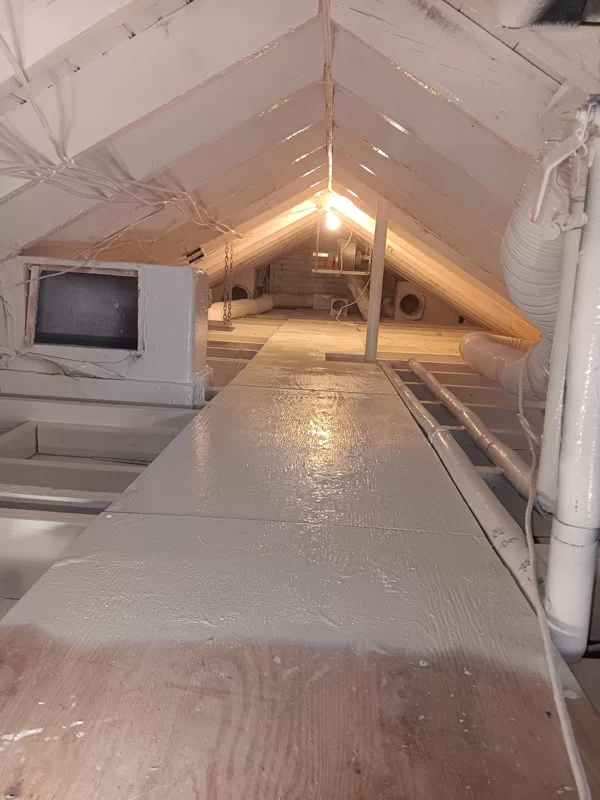
Industrial drying extracts moisture until wood reads at or below 15% humidity. We then apply a tinted antifungal encapsulant coating as a long-term protective barrier.
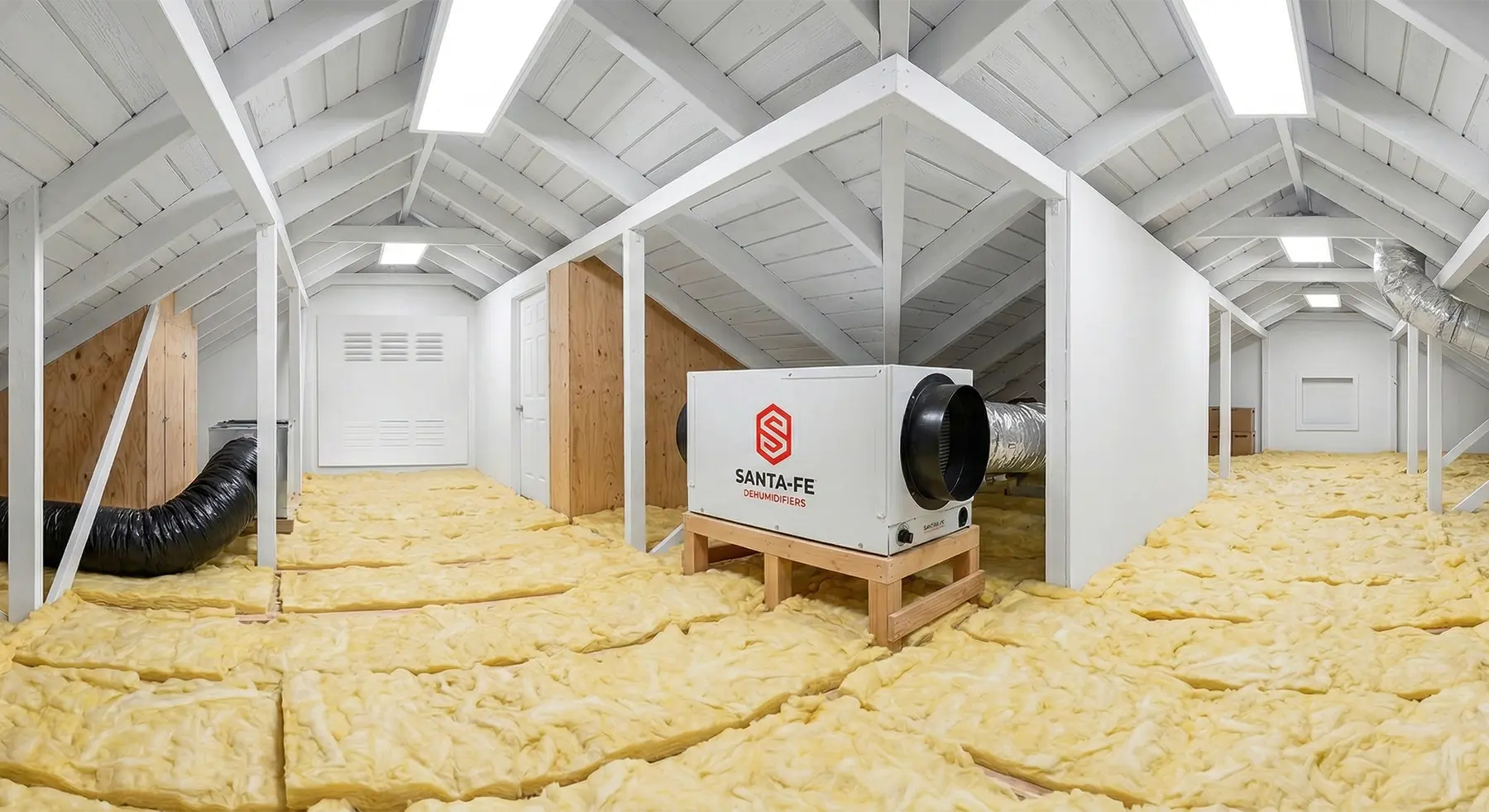
Phase 5: Post-Remediation Verification & Clearance Testing
Phase 5

Post-Remediation Verification

We conduct clearance testing to objectively certify normal spore levels, ensuring Post-Remediation Verification (PRV) criteria are met before any reconstruction or new insulation begins.
Phase 6: Encapsulation & Preventative Moisture Barrier
Phase 6 (Recommended)

Active Protection

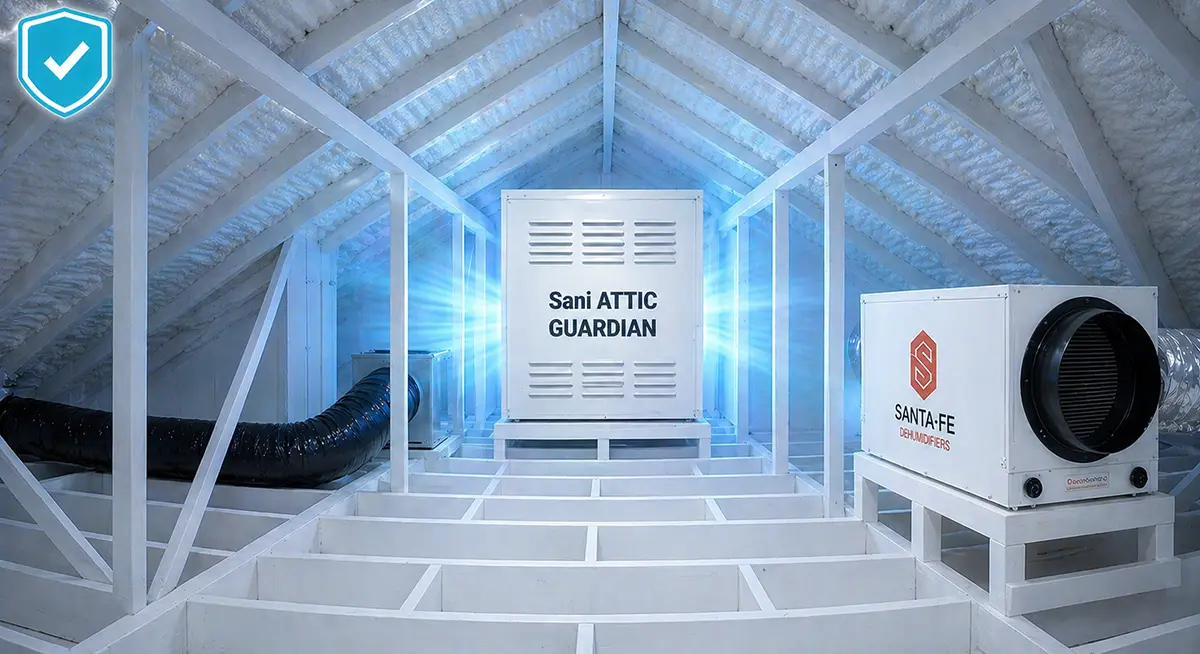
Integration of the Sani Attic Guardian technology. This advanced system provides continuous active protection to shield your attic against future fungal outbreaks and maintain optimal air quality.

Sani Attic Continuous Decontamination System

Protect your home's structural integrity and your family's health with our rigorous, professional decontamination protocol.

Sani ATTIC GUARDIAN
& Spray Foam Homes

Our comprehensive system works alongside dedicated dehumidifiers to keep your home protected.

For homes with Closed-Cell Spray Foam insulation, the solution requires special attention: because spray foam fully seals a Florida attic, it creates a closed envelope. As the attic heats and cools, the sealed environment depressurizes, pushing the attic air down into your home.

To solve this dangerous depressurization effect, we highly recommend homeowners install a dedicated Attic Dehumidifier to control humidity. As the ultimate complement, we install our Sani ATTIC GUARDIAN powered by ActivePure® Technology. It is engineered to actively neutralize and mitigate airborne and surface contaminants—including mold spores, mildew, and volatile organic compounds (VOCs/mVOCs) emitted by insulation off-gassing—within the attic's sealed envelope, effectively purifying the air before it can enter your living spaces.

Attic & Spray Foam Risk Dew Point Physics

Is Your Sealed Attic Trapping Destructive Condensation?

Use our scientific Florida Mold Growth & Dew Point Simulator to model how outdoor Florida humidity interacts with AC roof decking and spray foam seals to prevent hidden mold rot.

Exclusive Insight

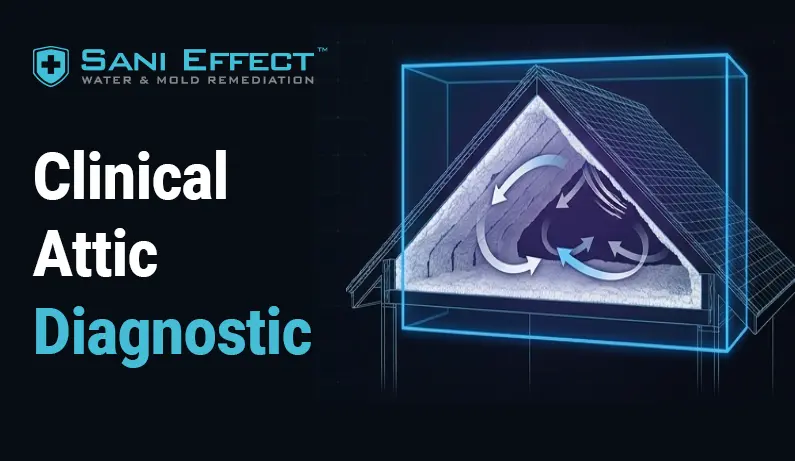
Clinical Attic
Diagnosis

Discover how we utilize certified space technology to protect your attic and ensure a healthy indoor environment.
Clinical Attic Diagnostic - Sani Effect Florida
Real Results

Attic Remediation Project Gallery

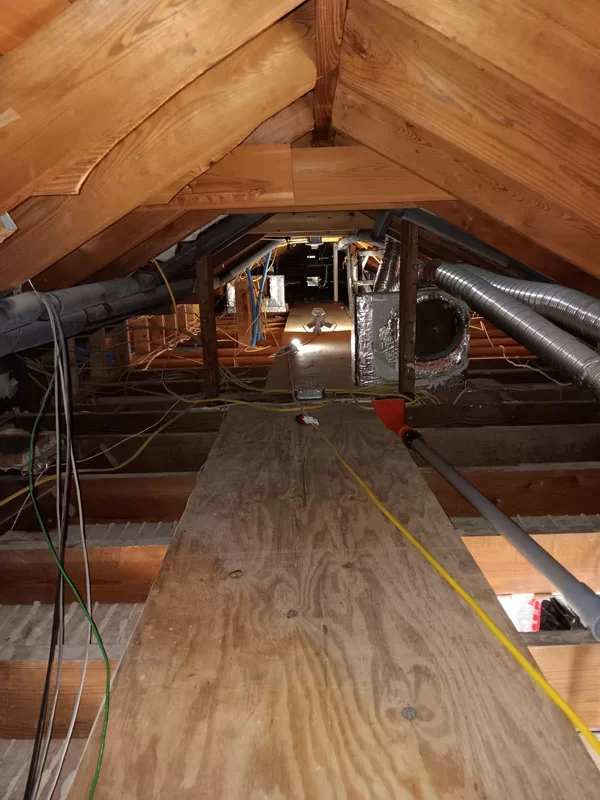
Explore before-and-after photos and on-site documentation from our recent projects.
Common Questions

The Unfiltered Truth About Attic Mold Remediation

Everything you need to know about our attic mold remediation process.
Sani Effect Team


Yes, it is completely possible. Many homeowners assume that what happens in the attic stays in the attic, but this is a dangerous myth. There is a phenomenon known in building science as the "Stack Effect" and depressurization. Contaminated air containing mold spores and toxins in the attic can seep into your living areas through recessed lights, attic access hatches, plumbing gaps, and ceiling cracks. Furthermore, if you have spray foam insulation, the sealed attic is pushing that stagnant, contaminated air directly into your bedrooms. If your family suffers from allergies or a persistent cough while at home, the attic is one of the first places to inspect.

That persistent smell could be the result of a process called "off-gassing". If the foam's chemical mixture wasn't exact or if it didn't cure properly due to extreme Florida heat, it can release Volatile Organic Compounds (VOCs) and strong chemical odors into your home. However, improperly cured foam can also absorb moisture and encourage bacterial and mold growth. A professional inspection combined with air purification like our Sani ATTIC GUARDIAN system—which breaks down these chemicals and odors—is vital.

This is the greatest risk of spray foam. Water from a broken shingle can slip behind the foam, rotting the wood for years without you seeing a single stain or leak in your home. To detect this, our experts use infrared thermal imaging cameras and moisture meters that allow us to "see" cold spots or hidden water intrusion behind the foam barrier. (Insurance Note: Prolonged, hidden structural damage is often grounds for denial in insurance claims and can complicate policy renewals).

Generally, insurance policies do not cover mold if it was caused by a lack of continuous maintenance or poor ventilation over time. However, if the mold and attic damage are the direct result of a sudden and accidental water intrusion, such as hurricane damage, a tropical storm, or a recent roof leak, most insurers will cover the cleanup and insulation replacement.

Absolutely not. Attempting to clean attic mold with bleach is one of the most dangerous and counterproductive mistakes you can make. Bleach does not work on porous surfaces like your attic's structural wood. It only "bleaches" the surface layer of the mold, making it invisible, while leaving the root intact. Worse still, because bleach contains water, you are literally feeding the mold root deep inside the wood, ensuring it returns even stronger.

ActivePure technology (used in our Sani ATTIC GUARDIAN system) is backed by hard science. Unlike a traditional HEPA filter that passively "waits" for air to pass through it, ActivePure is proactive. It uses UV light and a catalyst to convert ambient humidity into safe oxidizing molecules that travel throughout the enclosed space, seeking out and destroying mold, viruses, and bacteria both in the air and on surfaces.

A dehumidifier is an excellent preventive tool for keeping humidity below 50%, especially in spray foam attics. However, it does not solve an existing mold problem. If mold is already present, it must be physically removed and the water source (such as a roof leak) must be repaired first.

Traditional insulation (fiberglass or cellulose) acts like a sponge. If it is wet or contaminated with mold, it loses its thermal effectiveness (R-value) and cannot be cleaned safely. It must be physically removed under strict containment protocols, disposed of in sealed bags, and replaced with fresh, clean insulation.

Not all black discoloration on your attic is toxic mold; sometimes it can be dirt, wood rot, the natural wood grain, or accumulated dust. However, it is impossible to identify the type of mold or toxin simply by looking at its color. The only way to know the toxicity level with certainty is through professional testing and sampling.

Your house will not collapse overnight, but you shouldn't ignore it. Mold feeds on organic materials like wood. If left unchecked for months or years, it will begin to rot and weaken key structural elements of your home, such as rafters and trusses. Detecting it early means we can use antimicrobial agents to deeply clean the wood and encapsulate it, saving the structure without the need for costly reconstruction.
Reviews

Testimonials

JT
James T.
Jupiter, FL

"After discovering a minor roof leak, we found our entire attic was covered in mold. SaniEffect's team was incredible. They explained the whole process, set up proper containment, and their ActivePure technology made the house smell fresh again. True professionals from start to finish."

SL
Sarah L.
Palm Beach Gardens, FL

"We had spray foam installed and soon noticed a strange odor. SaniEffect identified the depressurization issue and installed the Sani Attic Guardian. The difference was night and day. My family's allergies have completely cleared up. Highly recommend their scientific approach!"

MR
Michael R.
West Palm Beach, FL

"I thought bleach would solve our attic mold problem, but it kept coming back. SaniEffect came in, removed the contaminated insulation, safely treated the wood, and sealed it. Their post-remediation testing gave us total peace of mind before selling our home."

Mold Education & Insights

Learn more about the hidden impacts of mold exposure and how building science affects your home's health.

Make Your Property a Healthy Environment

Call Sani Effect Today and schedule your

Attic Mold Remediation Service. (772) 206.2121

or click to Schedule the Service

Schedule Appointment

Environmental Consultant

Sani Effect - Online

Hello! I am the Sani Effect air quality consultant. How can I help you today?
Typing...
Listening... Speak now