
Why Palm Beach Condo Ducts Breed Mold
In multi-story coastal condominiums, air ducts are constructed from rigid fiberglass duct board sealed tightly above finished drywall ceilings. Unlike smooth metal, this porous material creates a predictable 3-step contamination chain:
The "Nutrient Sponge"
The inner fiberglass web traps household bio-dust, skin cells, pet dander, and cooking oils. Over 5 to 15 years, it forms a rich organic food supply.
The Dew Point Trigger
Chilled air (52°F–55°F) crossing high humidity causes microscopic condensation (water activity aw ≥ 0.70), waking dormant spores in complete darkness.
Dirty Grills: The Symptom
The dark discoloration on ceiling supply grills is not surface dust. It is the exhaust port of an entrenched fungal colony inside the ceiling duct board.
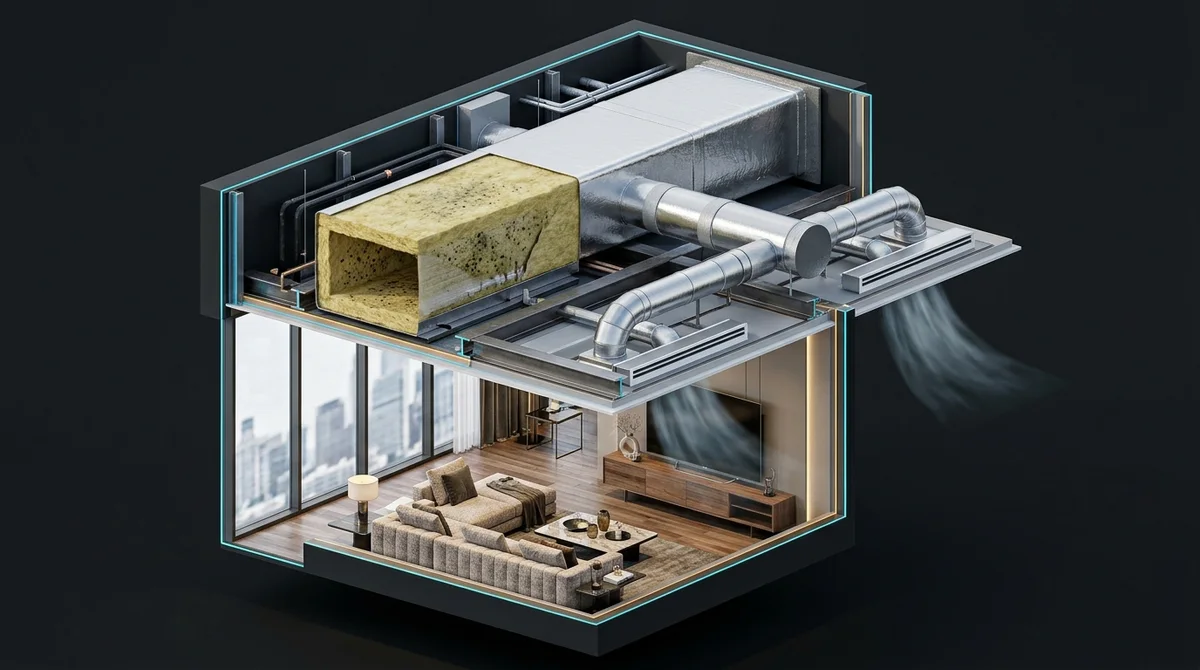 Architectural Cutaway: Concealed fiberglass duct board trunk lines trapped above luxury condo drop ceilings.
The 4 Primary Duct Mold Species
Quick-reference clinical profile of fungal taxa found in Palm Beach condominium duct systems:
Primary xerophilic colonizer. Lightweight conidia (2–3 µm) float continuously into rooms. Produces sterigmatocystin mycotoxins.
Symptoms: Allergic rhinitis, asthma attacks, coughConsumes bio-dust in the fiberglass mesh. Releases clouds of sub-micron cell fragments and ochratoxin A during blower starts.
Symptoms: Sinusitis, chronic headaches, fatigueForms dark green/black fuzzy clusters on exterior supply grills and cold metal collars where air meets warm room humidity.
Symptoms: Eye irritation, itchy skin, sneezing fitsSignals active water saturation (overflowing AC drain pan or pipe leak). Produces potent neurotoxic trichothecenes.
Symptoms: CIRS brain fog, neurological exhaustionCompare The 2 Remediation Options
When microbial colonization is confirmed inside condominium fiberglass ducts, property owners and HOAs must evaluate two engineering approaches:
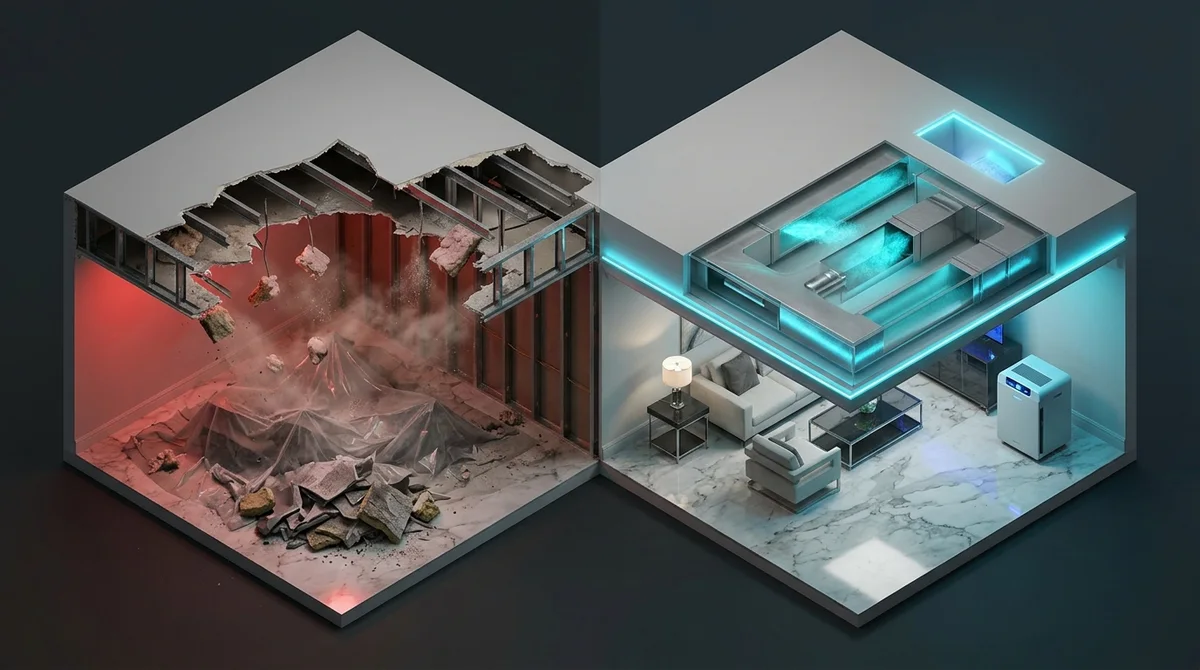 Visual Engineering Comparison: Invasive ceiling demolition & reconstruction (Left) vs. Non-destructive Sani Coat in-situ encapsulation & ActivePure® protection (Right).
Complete Duct Replacement
Tear down finished ceilings to extract every foot of contaminated fiberglass and install new insulated metal or antimicrobial-lined ductwork.
Sani Coat In-Situ Encapsulation
Gentle extraction, hospital-grade electrostatic botanical fogging, and application of Sani Coat flexible fungistatic barrier to seal fibers in place.
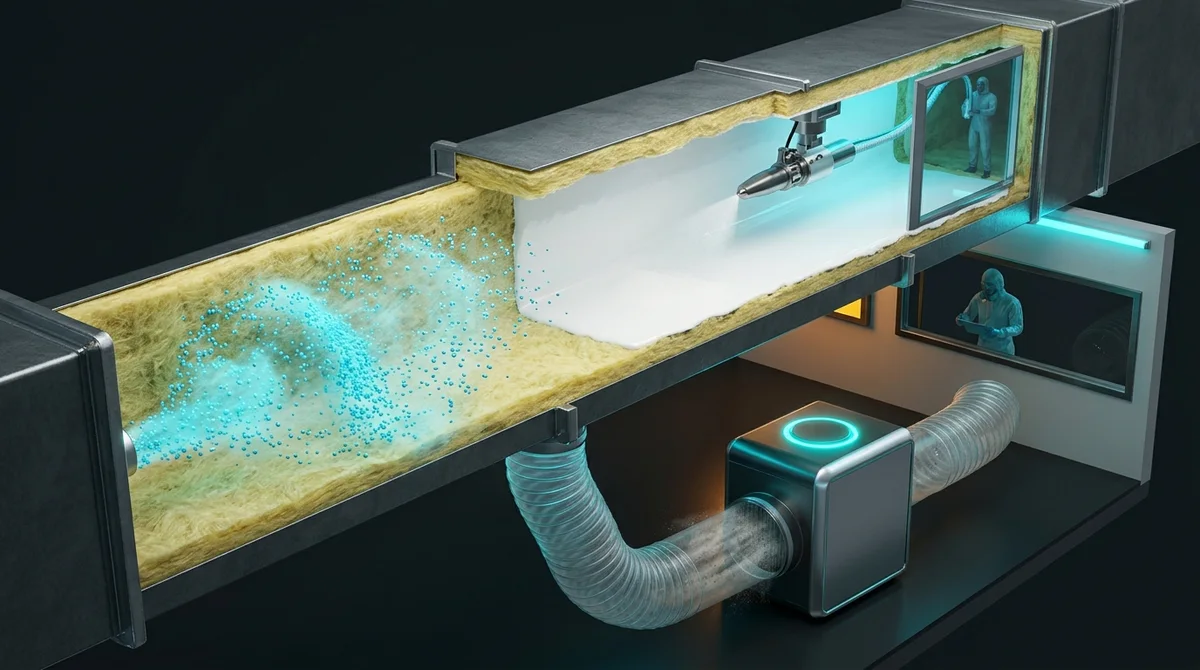 Sani Effect Clinical Restoration: Electrostatic botanical fogging and zero-VOC Sani Coat fungistatic encapsulation under negative air HEPA scrubbing.
The 4-Step Sani Effect In-Situ Protocol
Executed with hospital-grade containment and commercial HEPA scrubbers under continuous negative pressure:
1. Soft Extraction
Non-abrasive HEPA extraction removes loose debris without damaging fragile fiberglass.
2. Electrostatic Mist
Sub-micron electrostatic misting applies EPA-registered botanicals deep into trunk lines.
3. Sani Coat Seal
Elastomeric fungistatic barrier binds loose fibers and locks out moisture permanently.
4. Plenum Sealing
Air handler mixing box and collar transitions are sealed against thermal condensation.
The 4-Pillar Condominium IAQ Shield
Preventing mold recurrence in coastal Florida condominiums requires controlling the building physics:
1. Dedicated Condo Dehumidifier
Keeps ambient relative humidity between 45%–55% RH year-round, preventing surfaces from crossing the dew point.
2. Exhaust Fan CFM Upgrades
Inspect and replace aged bathroom exhaust fans to eliminate cross-contamination and moisture stagnation.
3. Standalone HEPA Filtration
Continuous 24/7 particle capture operates independently of thermostat cooling cycles to remove organic fuel.
4. In-Plenum ActivePure® Guardian
ActivePure® Advanced Photohydrolysis Technology neutralizes 99.9% of mold and pathogens in air and on duct surfaces 24/7.
Book a Palm Beach Condo Duct Assessment
Get forensic clarity on your condominium’s duct board condition. Our licensed environmental specialists inspect your plenums, measure humidity differentials, and provide an itemized diagnostic report.